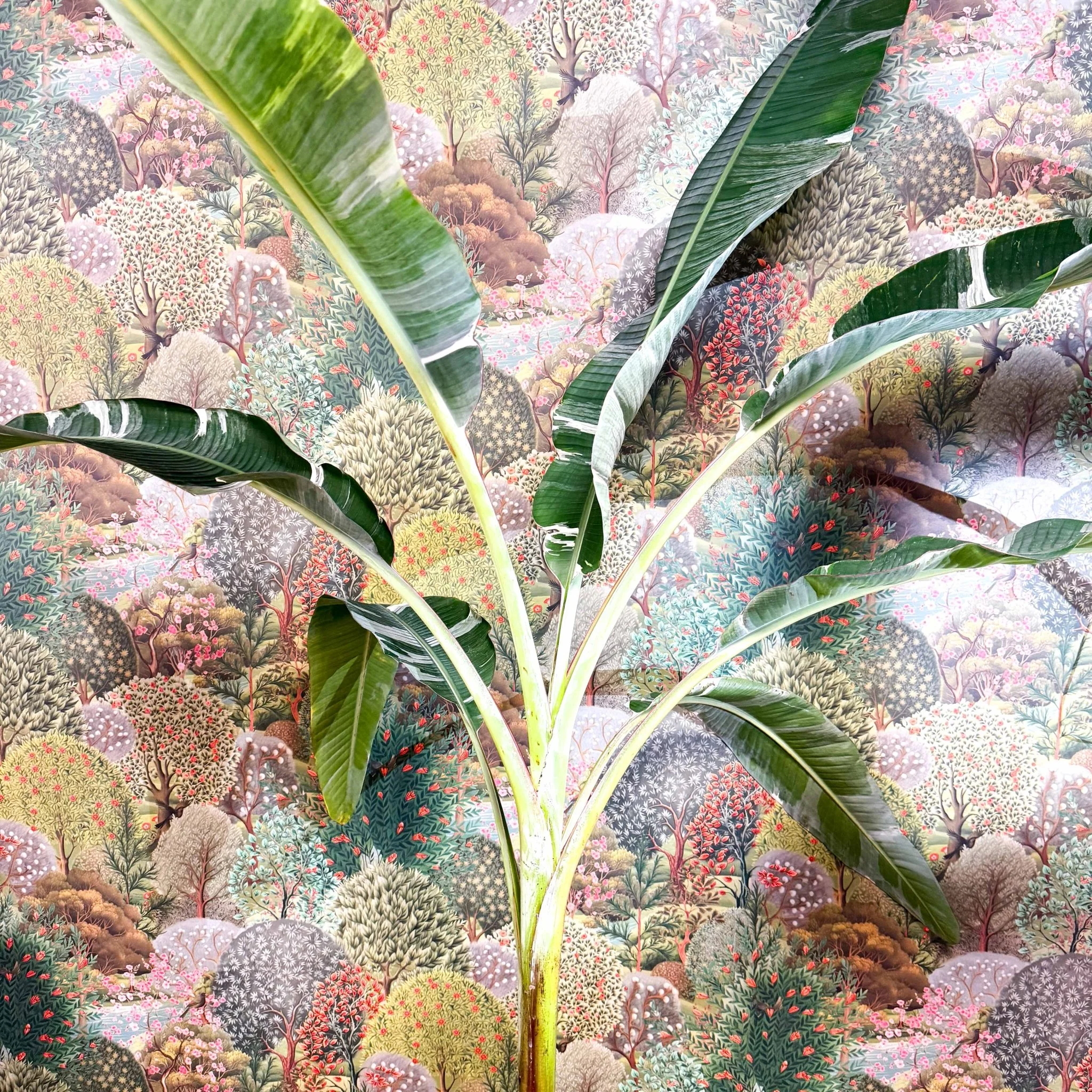
Musa 'Florida Variegata' - Variegated Banana Plant
A bold and highly sought-after banana plant, Musa ‘Florida Variegata’ is grown for its striking, irregular variegation in shades of green and creamy white. Each large, paddle-shaped leaf is uniquely patterned, creating a dramatic tropical statement in any indoor space. Fast-growing in the right conditions, this plant brings instant jungle vibes and is perfect as a focal point.
Scientific Name
Musa ‘Florida Variegata’ (banana plant)
Reclassification / History
Cultivated variety within the Musa genus. The exact species background is not always clearly defined, as many ornamental bananas are hybrids.
Synonyms
Sometimes referred to as Musa ‘Ae Ae’ in error, though this is a different, rarer cultivar
Common Name
Variegated Banana Plant
Origin
Derived from Musa species native to Southeast Asia, with this cultivar developed through horticultural selection.
Light
Prefers very bright, indirect light and can tolerate some direct sun. Higher light levels will help maintain strong variegation and encourage growth.
Water
Keep the soil consistently moist during the growing season, but not waterlogged. Allow the top few centimetres to dry slightly between waterings. Reduce watering in winter, but do not let the plant dry out completely.
Humidity
Thrives in higher humidity. Ideal for bright bathrooms, near a humidifier, or grouped with other plants. Low humidity may cause browning on the variegated sections of the leaves.
Soil
Use a rich, well-draining potting mix. A blend that retains moisture while allowing excess water to drain freely is ideal. Repot regularly during the growing season as this is a fast-growing plant.
Food
Feed every 1–2 waters during the growing season with a balanced liquid fertiliser, as bananas are heavy feeders. Reduce feeding in autumn and winter.
Temperature
Prefers warm temperatures between 18–30°C. Avoid temperatures below 12–15°C and protect from cold drafts.
Pet-safe
Generally considered non-toxic, but best kept out of reach of pets to prevent leaf damage.
Sprouts Top Tips
Variegated bananas need more light than their green counterparts – if growth slows or variegation fades, move it somewhere brighter and warmer.
Extra
This plant can grow quite large over time, so be prepared to give it space or prune older leaves to maintain shape indoors.
Did You Know?
Banana plants aren’t actually trees – they’re giant herbaceous plants, with their “trunk” made up of tightly wrapped leaf bases rather than woody tissue.
Product Information
Product Information
Shipping & Returns
Shipping & Returns
Description
A bold and highly sought-after banana plant, Musa ‘Florida Variegata’ is grown for its striking, irregular variegation in shades of green and creamy white. Each large, paddle-shaped leaf is uniquely patterned, creating a dramatic tropical statement in any indoor space. Fast-growing in the right conditions, this plant brings instant jungle vibes and is perfect as a focal point.
Scientific Name
Musa ‘Florida Variegata’ (banana plant)
Reclassification / History
Cultivated variety within the Musa genus. The exact species background is not always clearly defined, as many ornamental bananas are hybrids.
Synonyms
Sometimes referred to as Musa ‘Ae Ae’ in error, though this is a different, rarer cultivar
Common Name
Variegated Banana Plant
Origin
Derived from Musa species native to Southeast Asia, with this cultivar developed through horticultural selection.
Light
Prefers very bright, indirect light and can tolerate some direct sun. Higher light levels will help maintain strong variegation and encourage growth.
Water
Keep the soil consistently moist during the growing season, but not waterlogged. Allow the top few centimetres to dry slightly between waterings. Reduce watering in winter, but do not let the plant dry out completely.
Humidity
Thrives in higher humidity. Ideal for bright bathrooms, near a humidifier, or grouped with other plants. Low humidity may cause browning on the variegated sections of the leaves.
Soil
Use a rich, well-draining potting mix. A blend that retains moisture while allowing excess water to drain freely is ideal. Repot regularly during the growing season as this is a fast-growing plant.
Food
Feed every 1–2 waters during the growing season with a balanced liquid fertiliser, as bananas are heavy feeders. Reduce feeding in autumn and winter.
Temperature
Prefers warm temperatures between 18–30°C. Avoid temperatures below 12–15°C and protect from cold drafts.
Pet-safe
Generally considered non-toxic, but best kept out of reach of pets to prevent leaf damage.
Sprouts Top Tips
Variegated bananas need more light than their green counterparts – if growth slows or variegation fades, move it somewhere brighter and warmer.
Extra
This plant can grow quite large over time, so be prepared to give it space or prune older leaves to maintain shape indoors.
Did You Know?
Banana plants aren’t actually trees – they’re giant herbaceous plants, with their “trunk” made up of tightly wrapped leaf bases rather than woody tissue.