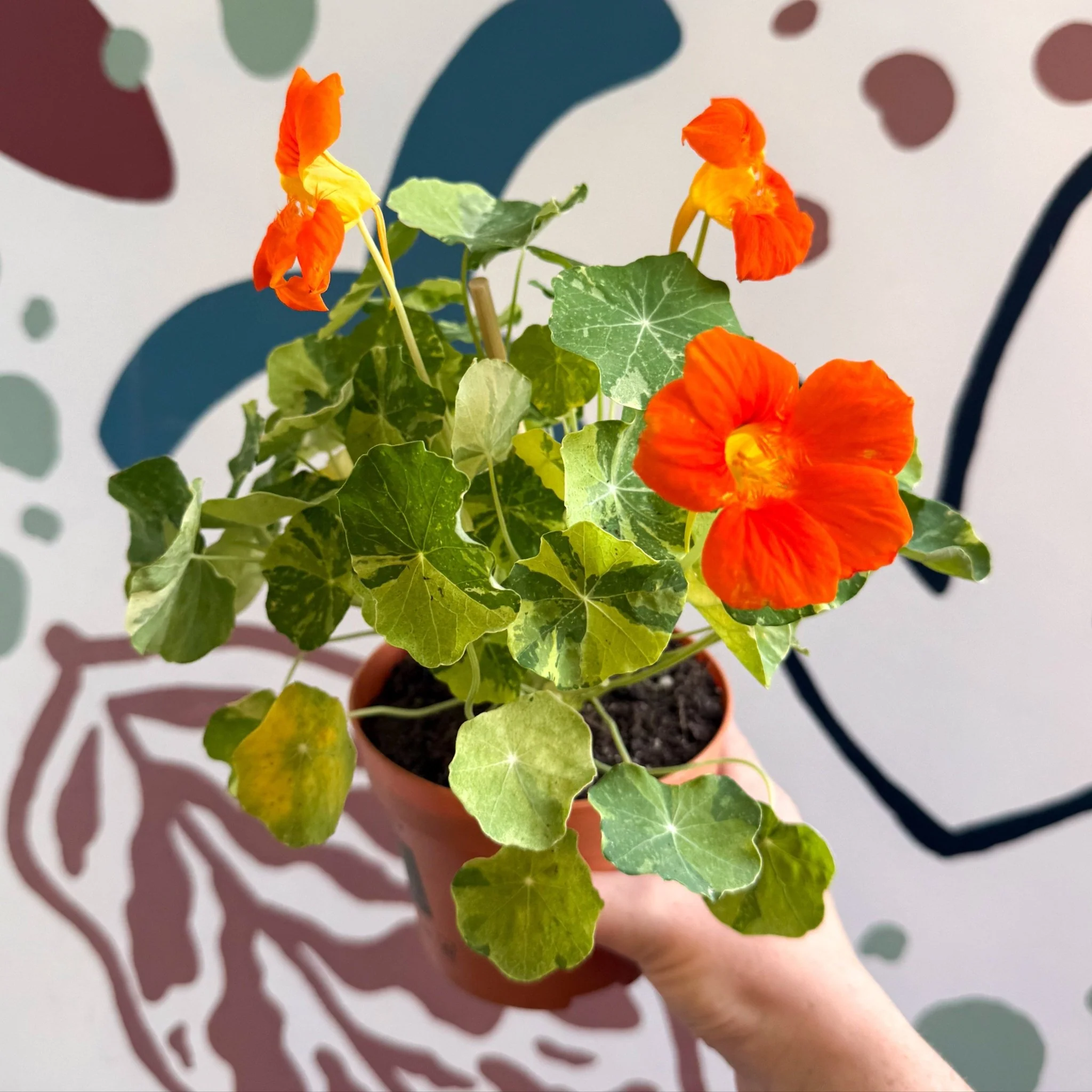
Tropaeolum majus 'Alaska Series' - Variegated Nasturtium
A standout variety of nasturtium, Tropaeolum majus ‘Alaska Series’ features striking cream-splashed foliage and a mix of cheerful, edible blooms in warm shades of orange, red, and yellow. Its bushy, semi-trailing habit makes it ideal for beds, borders, hanging baskets, and vegetable gardens. Easy to grow and quick to flower, it brings beauty, biodiversity, and flavour to any sunny spot.
Tropaeolum majus ‘Alaska Series’, commonly known as Variegated Nasturtium, is loved for its ornamental foliage and pollinator-friendly blooms. It’s also a brilliant companion plant in the veg patch, drawing in beneficial insects and deterring pests.
|
Annual |
Bushy to trailing, Edible, Fast-growing |
Flowers: June – October Foliage: May – October |
Scientific Name
Tropaeolum majus ‘Alaska Series’ (from Latin tropaeum = trophy and majus = large; cultivar bred for decorative foliage and compact habit)
Variegated Nasturtium, Alaska Nasturtium
Common Name
Nasturtium
Origin
Species native to South America (Peru, Bolivia, Colombia); this cultivar selected for garden use
Pruning Tips
No pruning needed – remove faded flowers to encourage continued blooming. Trim back straggly stems if needed for shape
Wildlife Value
Excellent for bees, butterflies, and hoverflies. Also works well as a trap crop for aphids, keeping them off veg
Positioning
Full sun to partial shade. Ideal for mixed borders, containers, and companion planting with veg like courgettes, brassicas, and tomatoes
Water
Water regularly during dry spells, especially in containers. Avoid overwatering
Soil
Poor to moderately fertile, well-drained soil. Rich soil encourages leaf growth over flowers
Food
No feeding needed – thrives in low-fertility soil
Pet-safe
Generally non-toxic. Flowers and leaves are edible for humans and safe for most pets
Sprouts Top Tips
The variegated foliage makes even the leaves a feature! Sow directly after the last frost and enjoy an edible, ornamental display with minimal effort.
Product Information
Product Information
Shipping & Returns
Shipping & Returns
Description
A standout variety of nasturtium, Tropaeolum majus ‘Alaska Series’ features striking cream-splashed foliage and a mix of cheerful, edible blooms in warm shades of orange, red, and yellow. Its bushy, semi-trailing habit makes it ideal for beds, borders, hanging baskets, and vegetable gardens. Easy to grow and quick to flower, it brings beauty, biodiversity, and flavour to any sunny spot.
Tropaeolum majus ‘Alaska Series’, commonly known as Variegated Nasturtium, is loved for its ornamental foliage and pollinator-friendly blooms. It’s also a brilliant companion plant in the veg patch, drawing in beneficial insects and deterring pests.
|
Annual |
Bushy to trailing, Edible, Fast-growing |
Flowers: June – October Foliage: May – October |
Scientific Name
Tropaeolum majus ‘Alaska Series’ (from Latin tropaeum = trophy and majus = large; cultivar bred for decorative foliage and compact habit)
Variegated Nasturtium, Alaska Nasturtium
Common Name
Nasturtium
Origin
Species native to South America (Peru, Bolivia, Colombia); this cultivar selected for garden use
Pruning Tips
No pruning needed – remove faded flowers to encourage continued blooming. Trim back straggly stems if needed for shape
Wildlife Value
Excellent for bees, butterflies, and hoverflies. Also works well as a trap crop for aphids, keeping them off veg
Positioning
Full sun to partial shade. Ideal for mixed borders, containers, and companion planting with veg like courgettes, brassicas, and tomatoes
Water
Water regularly during dry spells, especially in containers. Avoid overwatering
Soil
Poor to moderately fertile, well-drained soil. Rich soil encourages leaf growth over flowers
Food
No feeding needed – thrives in low-fertility soil
Pet-safe
Generally non-toxic. Flowers and leaves are edible for humans and safe for most pets
Sprouts Top Tips
The variegated foliage makes even the leaves a feature! Sow directly after the last frost and enjoy an edible, ornamental display with minimal effort.