Ocimum basilicum 'Sweet Genovese' - Genovese Basil - Cotswolds Grown Culinary Herbs
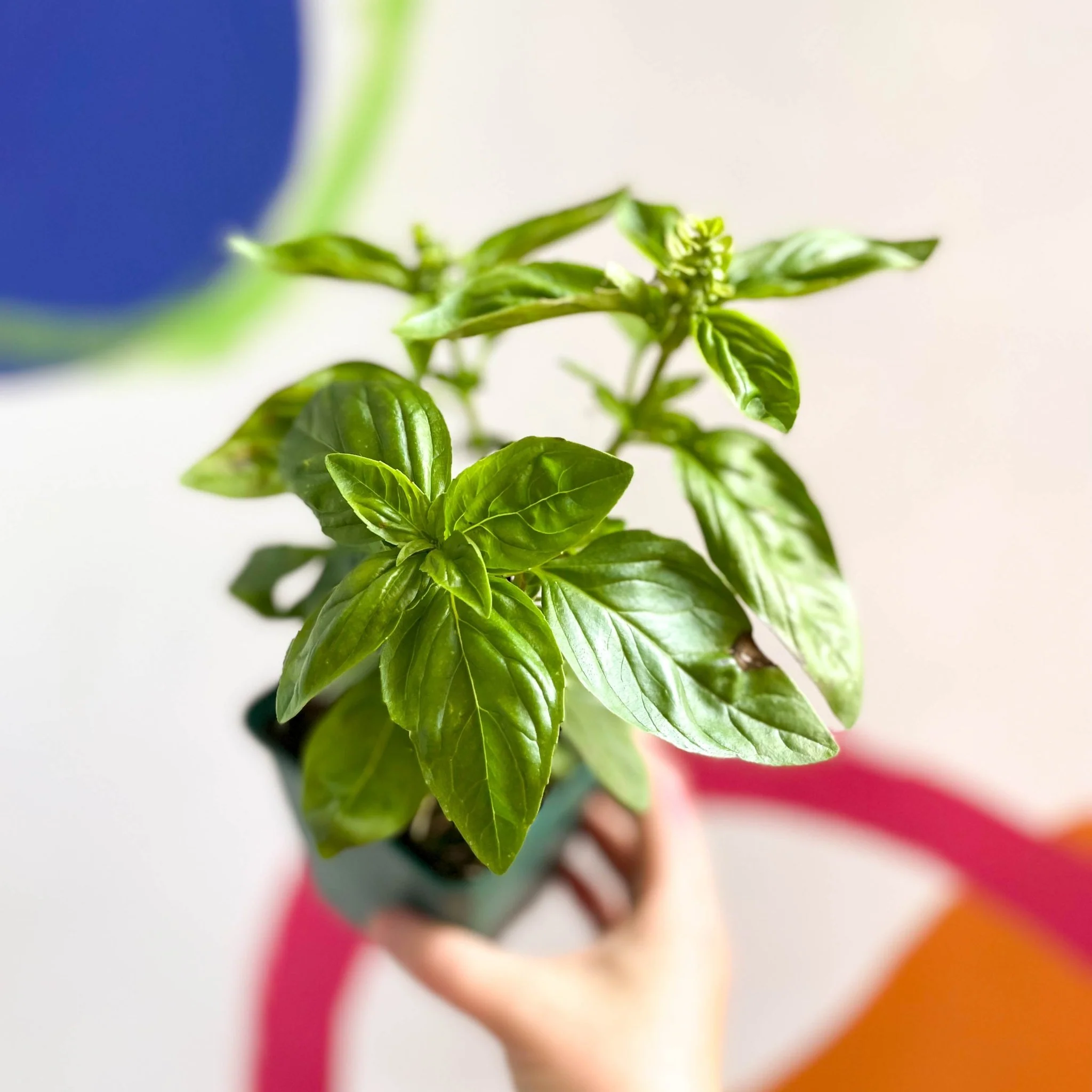
This classic Italian basil is grown for its large, glossy green leaves and intense sweet-spicy aroma. Ocimum basilicum ‘Sweet Genovese’ is the traditional choice for pesto and Mediterranean cooking, with a rich flavour that makes it a kitchen garden essential. Fast-growing and tender, it thrives in warmth and is best grown in pots or sheltered beds where you can pick leaves regularly.
Ocimum basilicum ‘Sweet Genovese’, commonly known as Sweet Basil, is the most popular culinary variety, favoured for its balanced flavour, aromatic leaves, and reliability.
|
Annual |
Tender, Bushy, Aromatic foliage |
Flowers: July – September (small white blooms, often removed to extend leaf harvest) Foliage: May – October (dependent on sowing time and weather) |
Scientific Name
Ocimum basilicum ‘Sweet Genovese’ (from Greek okimon, meaning aromatic herb)
Common Name
Sweet Basil, Genovese Basil
Origin
Native to tropical Asia and Africa; this cultivar is traditionally grown in the Liguria region of Italy
Pruning Tips
Pinch out growing tips regularly to encourage bushy growth and delay flowering. Remove flowers promptly to preserve leaf flavour
Wildlife Value
Bees and hoverflies love the flowers, though most gardeners remove them to prolong leafy growth
Positioning
Full sun in a sheltered, warm location – ideal in pots, raised beds, or sunny borders near the kitchen
Water
Keep soil moist but not soggy – water at the base to avoid splashing leaves, which can lead to mildew
Soil
Rich, free-draining compost or soil. Enrich with compost or organic matter before planting
Food
Feed fortnightly with a balanced liquid fertiliser for lush, healthy growth
Pet-safe
Generally considered non-toxic to pets
Sprouts Top Tips
Harvest little and often – the more you pick, the more it grows. Sow new seeds every few weeks in summer to keep a constant supply going right through to autumn.
Original: $7.51
-65%$7.51
$2.63Product Information
Product Information
Shipping & Returns
Shipping & Returns
Description
This classic Italian basil is grown for its large, glossy green leaves and intense sweet-spicy aroma. Ocimum basilicum ‘Sweet Genovese’ is the traditional choice for pesto and Mediterranean cooking, with a rich flavour that makes it a kitchen garden essential. Fast-growing and tender, it thrives in warmth and is best grown in pots or sheltered beds where you can pick leaves regularly.
Ocimum basilicum ‘Sweet Genovese’, commonly known as Sweet Basil, is the most popular culinary variety, favoured for its balanced flavour, aromatic leaves, and reliability.
|
Annual |
Tender, Bushy, Aromatic foliage |
Flowers: July – September (small white blooms, often removed to extend leaf harvest) Foliage: May – October (dependent on sowing time and weather) |
Scientific Name
Ocimum basilicum ‘Sweet Genovese’ (from Greek okimon, meaning aromatic herb)
Common Name
Sweet Basil, Genovese Basil
Origin
Native to tropical Asia and Africa; this cultivar is traditionally grown in the Liguria region of Italy
Pruning Tips
Pinch out growing tips regularly to encourage bushy growth and delay flowering. Remove flowers promptly to preserve leaf flavour
Wildlife Value
Bees and hoverflies love the flowers, though most gardeners remove them to prolong leafy growth
Positioning
Full sun in a sheltered, warm location – ideal in pots, raised beds, or sunny borders near the kitchen
Water
Keep soil moist but not soggy – water at the base to avoid splashing leaves, which can lead to mildew
Soil
Rich, free-draining compost or soil. Enrich with compost or organic matter before planting
Food
Feed fortnightly with a balanced liquid fertiliser for lush, healthy growth
Pet-safe
Generally considered non-toxic to pets
Sprouts Top Tips
Harvest little and often – the more you pick, the more it grows. Sow new seeds every few weeks in summer to keep a constant supply going right through to autumn.