Saintpaulia ionantha – Mosaic Variegated African Violet (Blush Pink Double Flowers)
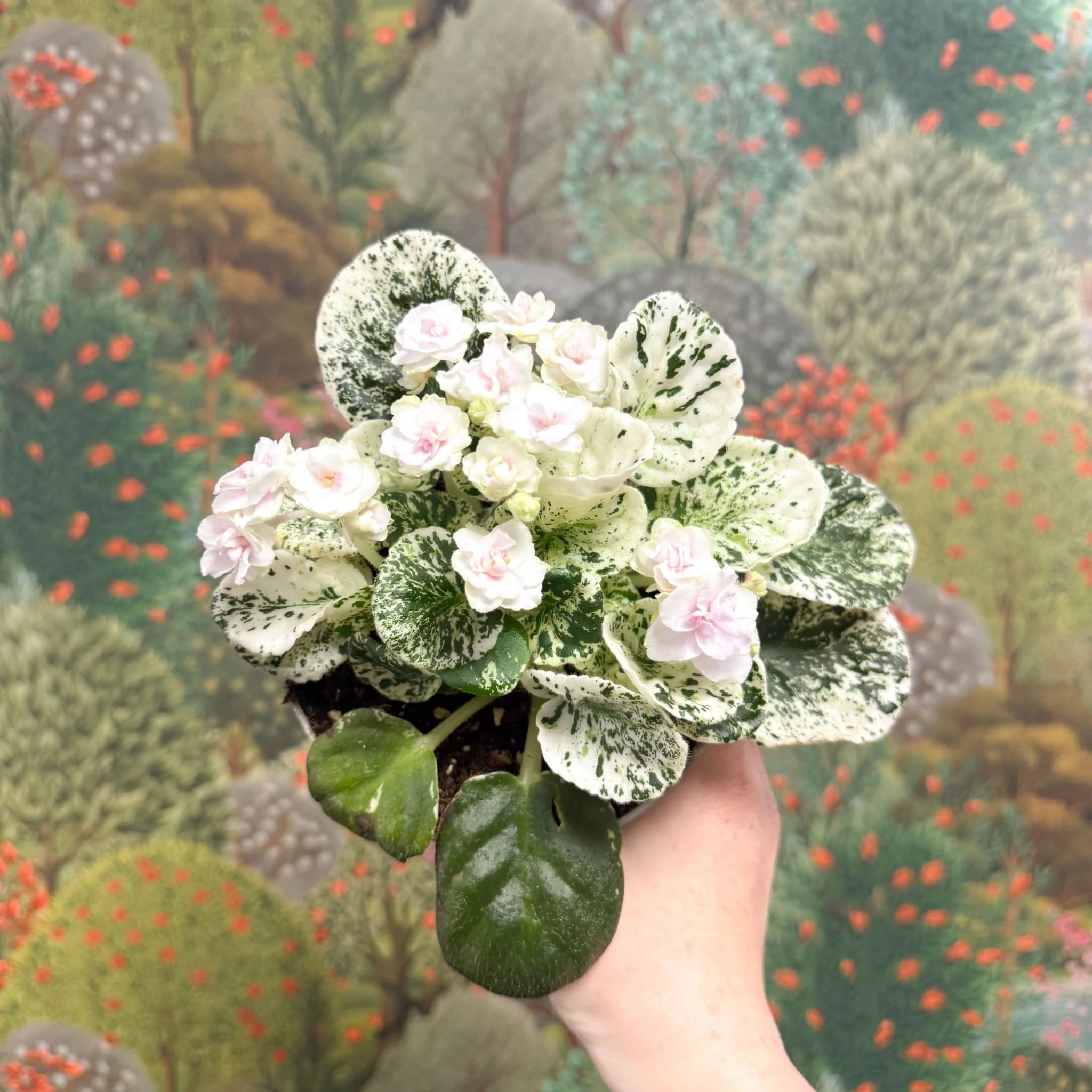
A really striking take on the classic African violet, this Saintpaulia ionantha features bold mosaic variegation with creamy white leaves scattered with deep green flecks.
Each plant is slightly different, with some almost fully cream and others more speckled, giving them a really unique, almost hand-painted look.
Soft blush pink, double flowers sit beautifully against the foliage, adding an extra layer of detail and making this feel a bit more special than your standard African violet. A lovely one for a bright windowsill where you can enjoy both the leaves and the blooms.
Scientific Name
Saintpaulia ionantha (commonly used in horticulture; now reclassified as Streptocarpus ionanthus, section Saintpaulia)
Synonyms
Streptocarpus sect. Saintpaulia; Streptocarpus ionanthus (sect. Saintpaulia)
Common Name
African Violet, Mini African Violet, Mosaic Variegated African Violet
Origin
Cultivated variety; original wild species native to the cloud forests of Tanzania and south-eastern Kenya.
Light
Prefers bright, indirect light. Ideal on a north- or east-facing windowsill. Too little light can reduce flowering, while direct midday sun may scorch leaves.
Water
Keep soil evenly moist but not waterlogged. Allow the top of the compost to dry before watering again. Bottom watering is best to avoid spotting the delicate, fuzzy leaves. Always use room-temperature water.
Humidity
Enjoys moderate humidity. Avoid misting; instead, place on a pebble tray with water or group with other plants for a healthier microclimate.
Soil
Use a free-draining mix such as African violet compost, or a light potting blend with added perlite. Repot every 1–2 years in spring, but avoid large pots – they bloom best when slightly rootbound.
Food
Feed every 2–3 weeks in spring and summer with a fertiliser high in potash to support flowering. Reduce feeding in winter.
Temperature
Best kept between 18–24°C. Protect from draughts and cold windowsills in winter.
Pet-safe
Non-toxic to cats and dogs.
Sprouts Top Tips
Remove old flowers promptly to encourage repeat blooming and to keep the plant neat. This also helps prevent fungal issues on spent blooms.
Extras
Pale blue African violets are especially treasured by collectors for their soothing, pastel tones and the way their flowers seem to glow in soft natural light.
Product Information
Product Information
Shipping & Returns
Shipping & Returns
Description
A really striking take on the classic African violet, this Saintpaulia ionantha features bold mosaic variegation with creamy white leaves scattered with deep green flecks.
Each plant is slightly different, with some almost fully cream and others more speckled, giving them a really unique, almost hand-painted look.
Soft blush pink, double flowers sit beautifully against the foliage, adding an extra layer of detail and making this feel a bit more special than your standard African violet. A lovely one for a bright windowsill where you can enjoy both the leaves and the blooms.
Scientific Name
Saintpaulia ionantha (commonly used in horticulture; now reclassified as Streptocarpus ionanthus, section Saintpaulia)
Synonyms
Streptocarpus sect. Saintpaulia; Streptocarpus ionanthus (sect. Saintpaulia)
Common Name
African Violet, Mini African Violet, Mosaic Variegated African Violet
Origin
Cultivated variety; original wild species native to the cloud forests of Tanzania and south-eastern Kenya.
Light
Prefers bright, indirect light. Ideal on a north- or east-facing windowsill. Too little light can reduce flowering, while direct midday sun may scorch leaves.
Water
Keep soil evenly moist but not waterlogged. Allow the top of the compost to dry before watering again. Bottom watering is best to avoid spotting the delicate, fuzzy leaves. Always use room-temperature water.
Humidity
Enjoys moderate humidity. Avoid misting; instead, place on a pebble tray with water or group with other plants for a healthier microclimate.
Soil
Use a free-draining mix such as African violet compost, or a light potting blend with added perlite. Repot every 1–2 years in spring, but avoid large pots – they bloom best when slightly rootbound.
Food
Feed every 2–3 weeks in spring and summer with a fertiliser high in potash to support flowering. Reduce feeding in winter.
Temperature
Best kept between 18–24°C. Protect from draughts and cold windowsills in winter.
Pet-safe
Non-toxic to cats and dogs.
Sprouts Top Tips
Remove old flowers promptly to encourage repeat blooming and to keep the plant neat. This also helps prevent fungal issues on spent blooms.
Extras
Pale blue African violets are especially treasured by collectors for their soothing, pastel tones and the way their flowers seem to glow in soft natural light.