Philodendron erubescens 'Prince of Orange' - British Grown
Scientific Name
Philodendron erubescens (blushing tree-hugger) var. 'Prince of Orange'
Common Names
Prince of Orange, Orange Prince
Origin
Tropical areas of South/Central America
Description
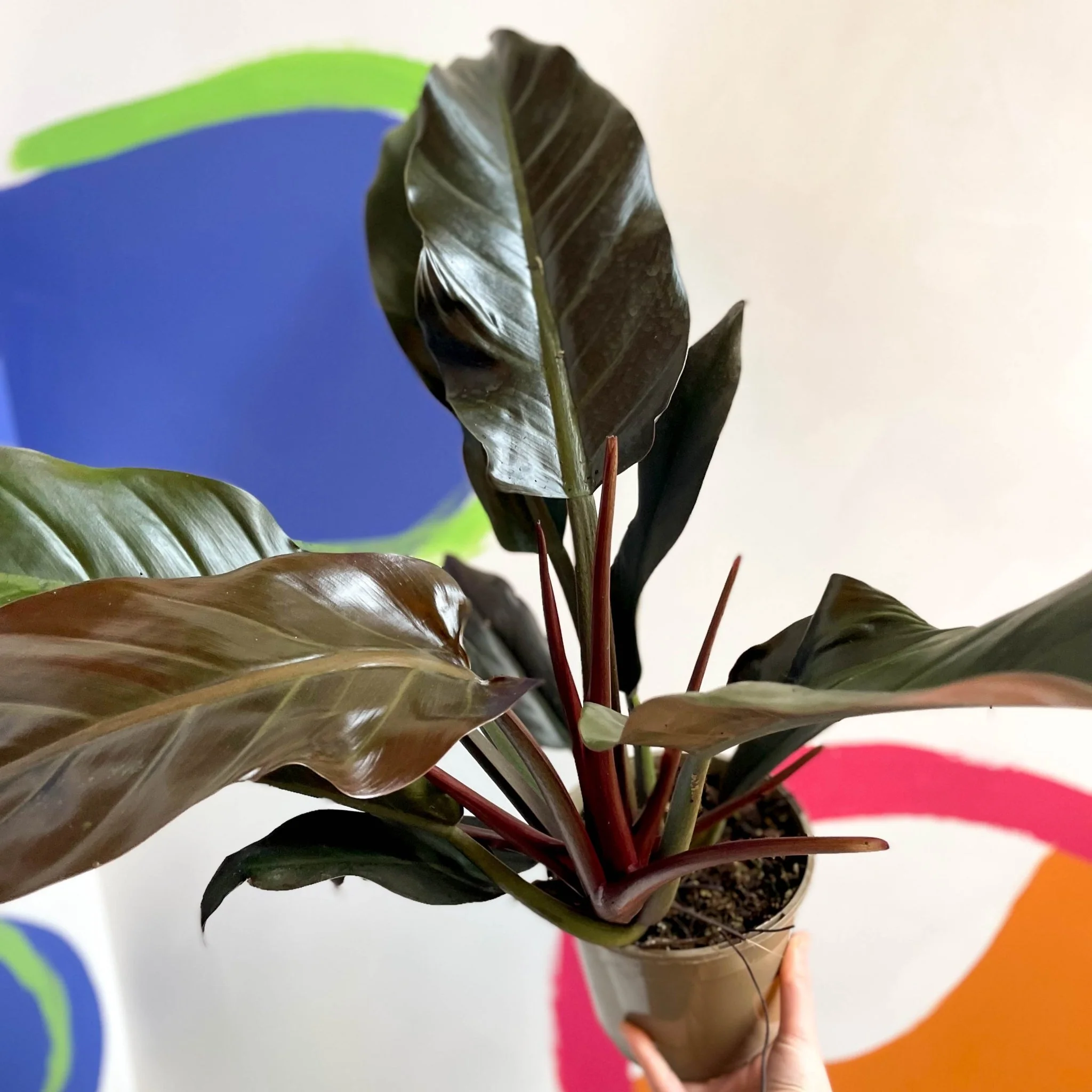
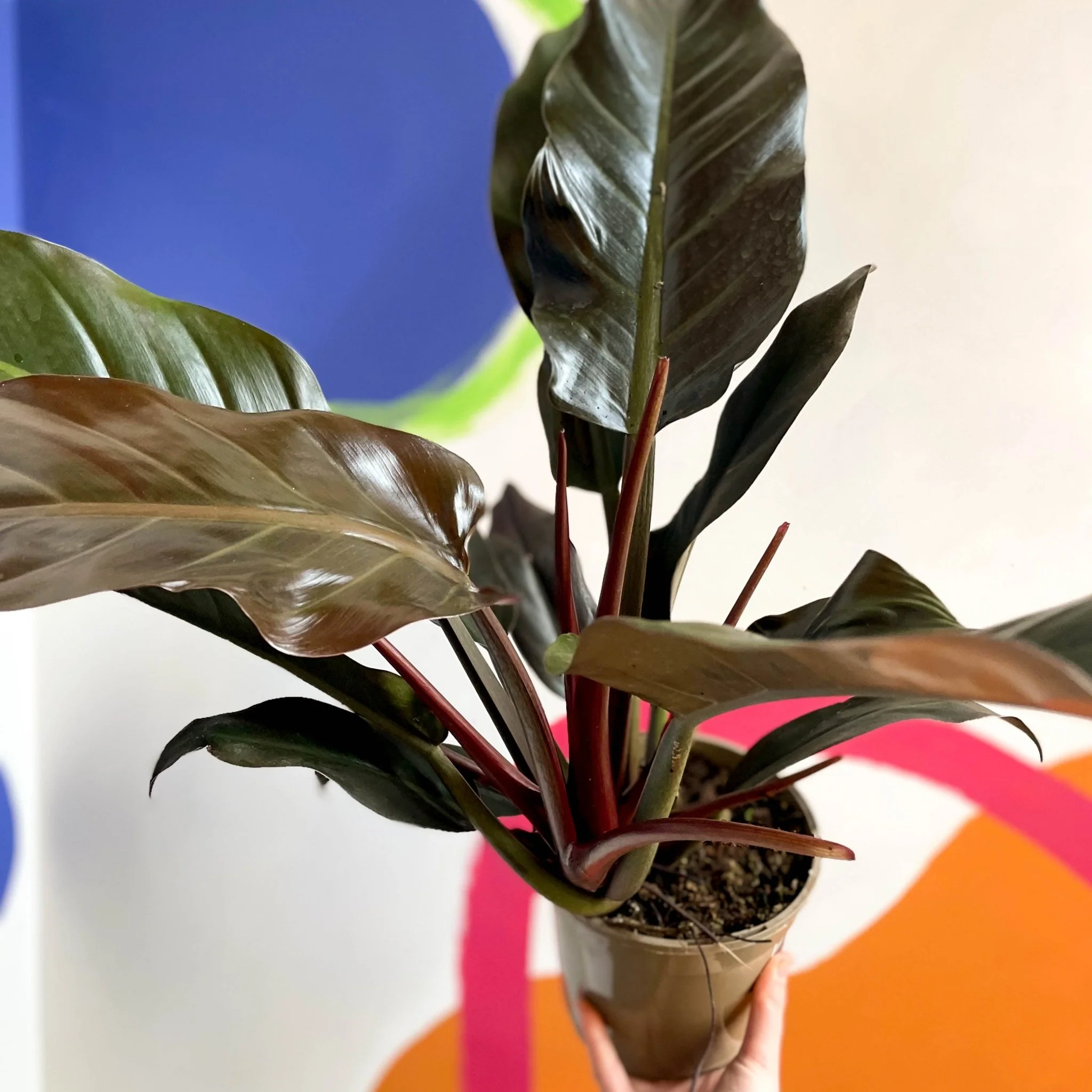
This aroid gets its name from the vibrant and varied hue of its leaves- starting off yellow, darkening to orange, and eventually green. If you can get a plant with several leaves at the different stages, it's a festival of colour!
Light
Place in moderate to bright indirect light. Avoid direct sunlight as this can scorch the leaves.
Water
Allow the top two inches of soil to dry out in between waterings (these plants are easy-going so if you wait a little longer to water don't panic!). Ensure good drainage and don't allow to sit in water.
Humidity
Appreciates above average humidity, but will do just fine in most standard household humidity. Will appreciate an occassional misting, especially if in a dryer spot.
Soil
Use a chunky, well draining mix.
Food
Will benefit from a light feed throughout spring and summer.
Temperature
Average household temperatures of about 18-28° are fine- try not to place somewhere where temperatures dip below 12°C for extended periods.
Pet-safe
No, this plant is toxic to pets and small humans.
Sprouts Top Tips
Water with tepid rather than cold water to avoid shocking the plant. Rotate it now and then to promote even growth. Avoid draughty spots.
Product Information
Product Information
Shipping & Returns
Shipping & Returns
Description
Scientific Name
Philodendron erubescens (blushing tree-hugger) var. 'Prince of Orange'
Common Names
Prince of Orange, Orange Prince
Origin
Tropical areas of South/Central America
Description
This aroid gets its name from the vibrant and varied hue of its leaves- starting off yellow, darkening to orange, and eventually green. If you can get a plant with several leaves at the different stages, it's a festival of colour!
Light
Place in moderate to bright indirect light. Avoid direct sunlight as this can scorch the leaves.
Water
Allow the top two inches of soil to dry out in between waterings (these plants are easy-going so if you wait a little longer to water don't panic!). Ensure good drainage and don't allow to sit in water.
Humidity
Appreciates above average humidity, but will do just fine in most standard household humidity. Will appreciate an occassional misting, especially if in a dryer spot.
Soil
Use a chunky, well draining mix.
Food
Will benefit from a light feed throughout spring and summer.
Temperature
Average household temperatures of about 18-28° are fine- try not to place somewhere where temperatures dip below 12°C for extended periods.
Pet-safe
No, this plant is toxic to pets and small humans.
Sprouts Top Tips
Water with tepid rather than cold water to avoid shocking the plant. Rotate it now and then to promote even growth. Avoid draughty spots.