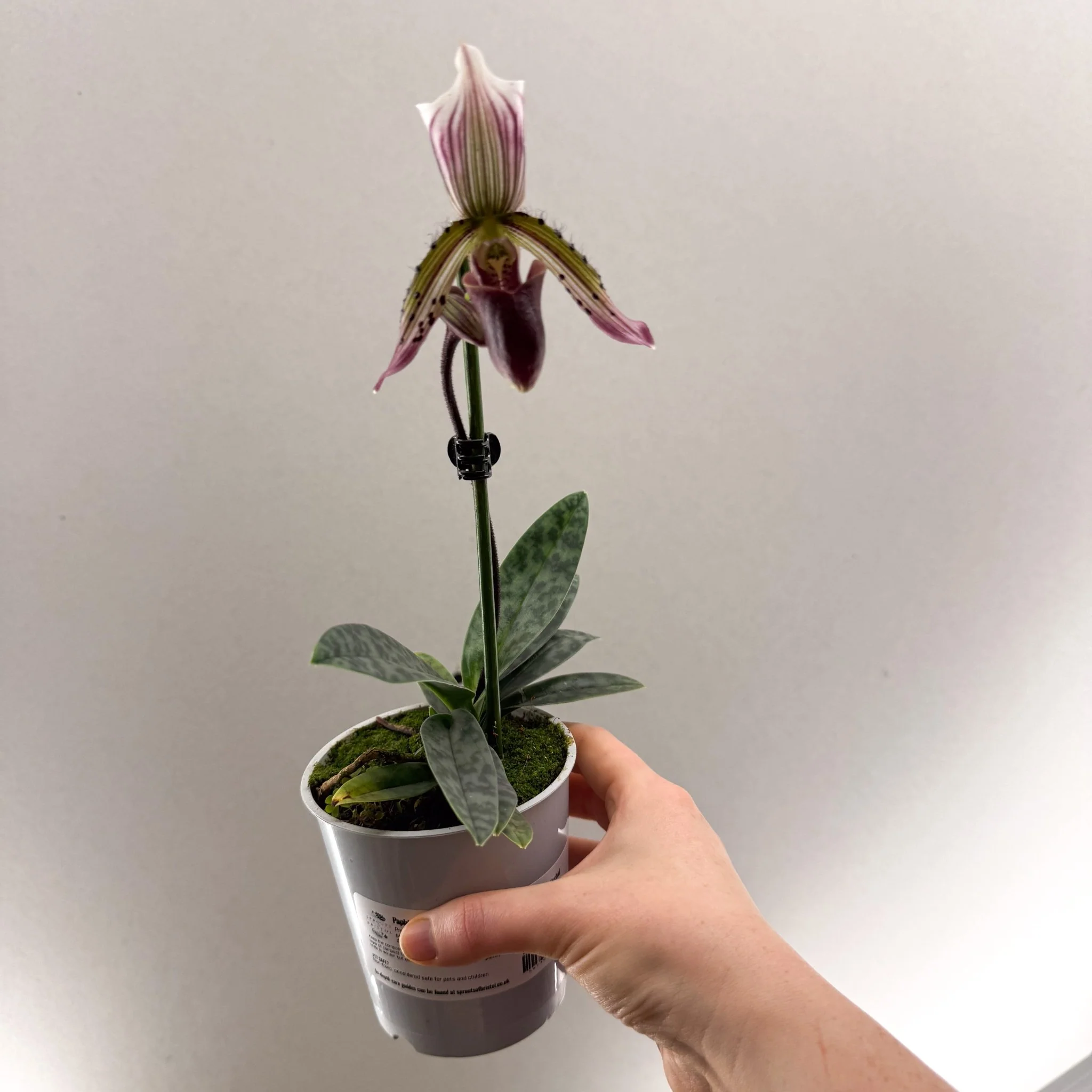
Paphiopedilum hirsutissimum – Purple Hairy Slipper Orchid
A striking and characterful species slipper orchid, Paphiopedilum hirsutissimum is prized for its richly coloured purple to maroon flowers, marked with green striping and distinctive hairy petal edges. The blooms are bold and textural, held above attractively mottled foliage. Slower-growing than many hybrids, this species rewards steady care with dramatic, long-lasting flowers that feel truly special.
Scientific Name
Paphiopedilum hirsutissimum (very hairy, referring to the bristly hairs along the petals)
A true species within the Paphiopedilum genus, part of the Orchidaceae family. Unlike Maudiae-type Paphiopedilums, Paphiopedilum hirsutissimum is not a hybrid and can be reliably identified by its mottled leaves and the distinctive hairs along the edges of the petals and sepals.
Common Name
Purple Slipper Orchid, Hairy Slipper Orchid
Origin
Native to north-east India, Myanmar, Thailand, and surrounding regions, where it grows terrestrially in leaf litter on shaded forest floors.
Light
Prefers bright, indirect light or light shade. Avoid direct sunlight, which can scorch the leaves. Slightly brighter light in autumn can help support flower development.
Water
Keep the compost evenly moist but not waterlogged. Allow the top layer of compost to dry slightly between waterings. Reduce watering a little in winter, but never allow the plant to dry out completely.
Humidity
Enjoys moderate to high humidity. Performs well in kitchens, bathrooms, or near a pebble tray. Avoid misting directly into the crown.
Soil
Use a specialist Paphiopedilum or fine orchid bark mix that retains some moisture while still draining freely. Repot every 1–2 years, ideally after flowering.
Food
Feed every 3–4 waters during the growing season with a diluted orchid fertiliser. Reduce feeding significantly in winter.
Temperature
Prefers slightly cooler conditions than many hybrid Paphiopedilums. Ideal temperature range is 15–22°C. Avoid temperatures below 10–12°C and protect from cold draughts.
Pet-safe
Non-toxic. Considered safe for pets and children.
Sprouts Top Tips
This species appreciates consistent conditions – sudden changes in temperature or watering can delay flowering.
Extras
Typically flowers from late winter into spring, with each growth flowering once before producing new shoots at the base.
Did You Know?
The fine hairs along the petals are thought to help guide and temporarily trap pollinating insects, increasing the plant’s chances of successful pollination in the wild.
Product Information
Product Information
Shipping & Returns
Shipping & Returns
Description
A striking and characterful species slipper orchid, Paphiopedilum hirsutissimum is prized for its richly coloured purple to maroon flowers, marked with green striping and distinctive hairy petal edges. The blooms are bold and textural, held above attractively mottled foliage. Slower-growing than many hybrids, this species rewards steady care with dramatic, long-lasting flowers that feel truly special.
Scientific Name
Paphiopedilum hirsutissimum (very hairy, referring to the bristly hairs along the petals)
A true species within the Paphiopedilum genus, part of the Orchidaceae family. Unlike Maudiae-type Paphiopedilums, Paphiopedilum hirsutissimum is not a hybrid and can be reliably identified by its mottled leaves and the distinctive hairs along the edges of the petals and sepals.
Common Name
Purple Slipper Orchid, Hairy Slipper Orchid
Origin
Native to north-east India, Myanmar, Thailand, and surrounding regions, where it grows terrestrially in leaf litter on shaded forest floors.
Light
Prefers bright, indirect light or light shade. Avoid direct sunlight, which can scorch the leaves. Slightly brighter light in autumn can help support flower development.
Water
Keep the compost evenly moist but not waterlogged. Allow the top layer of compost to dry slightly between waterings. Reduce watering a little in winter, but never allow the plant to dry out completely.
Humidity
Enjoys moderate to high humidity. Performs well in kitchens, bathrooms, or near a pebble tray. Avoid misting directly into the crown.
Soil
Use a specialist Paphiopedilum or fine orchid bark mix that retains some moisture while still draining freely. Repot every 1–2 years, ideally after flowering.
Food
Feed every 3–4 waters during the growing season with a diluted orchid fertiliser. Reduce feeding significantly in winter.
Temperature
Prefers slightly cooler conditions than many hybrid Paphiopedilums. Ideal temperature range is 15–22°C. Avoid temperatures below 10–12°C and protect from cold draughts.
Pet-safe
Non-toxic. Considered safe for pets and children.
Sprouts Top Tips
This species appreciates consistent conditions – sudden changes in temperature or watering can delay flowering.
Extras
Typically flowers from late winter into spring, with each growth flowering once before producing new shoots at the base.
Did You Know?
The fine hairs along the petals are thought to help guide and temporarily trap pollinating insects, increasing the plant’s chances of successful pollination in the wild.