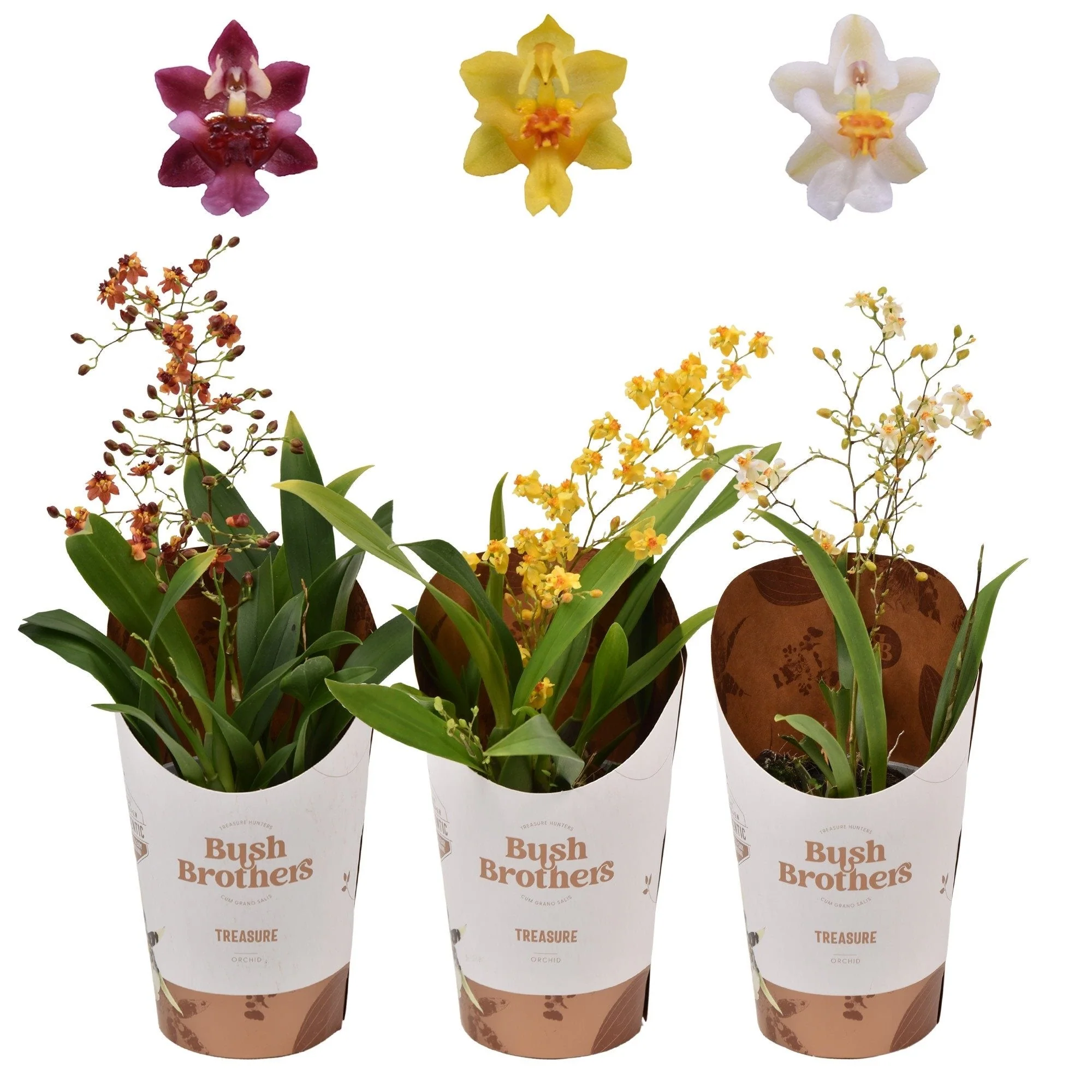
Oncidium flexuosum 'Twinkle’ - Tiny Butterfly Orchid (Random Colour/Buds Closed)
Charming and delicate, Oncidium flexuosum ‘Twinkle’, also known as the Tiny Butterfly Orchid, is a true miniature treasure. It produces clouds of tiny, fragrant flowers in shades of white, pink, yellow, or red – each one fluttering like little butterflies. Compact and free-flowering, ‘Twinkle’ is ideal for small spaces, windowsills, and orchid collections. Plants are sold singularly with buds closed, with colour varying randomly – part of the surprise and magic as they bloom at home!
Scientific Name
Oncidium flexuosum ‘Twinkle’
(flexuosum = “bending” or “wavy,” referencing the plant’s gracefully arching flower stems)
Common Name
Tiny Butterfly Orchid, Oncidium ‘Twinkle’, Miniature Dancing Lady Orchid
Origin
Native to Central and South America, especially Brazil, where it grows as an epiphyte in warm, bright, and humid forest canopies.
Light
Prefers bright, indirect light. Gentle morning sun is ideal. Without enough light, blooming may be reduced – aim for a bright windowsill or filtered sun to encourage flowers.
Water
Water when the top half of the potting mix feels dry. Allow for good drainage and never let the roots sit in soggy soil. Reduce watering slightly in cooler months.
Humidity
Thrives in moderate to high humidity (50–70%). Mist occasionally or place near other plants to maintain humidity, especially in drier rooms.
Soil
Use a fine-grade orchid mix with bark, perlite, and a little moss to retain some moisture but still allow airflow around the roots.
Food
Feed every 2–3 weeks during the growing season (spring to autumn) with a diluted orchid fertiliser. Pause feeding after the flowering period.
Temperature
Best kept between 18–26°C. Prefers slight temperature drops at night to encourage blooming. Avoid temperatures below 12°C.
Pet-safe
Yes – Oncidium species are non-toxic to pets and humans.
Sprouts Top Tips
After blooming, trim the spent flower spikes back to just above a node or the base. Keep the plant in bright light to encourage new growth and future flowering. Every ‘Twinkle’ brings a surprise – you may get white, pink, yellow, or even mixed-toned flowers!
Original: $16.90
-65%$16.90
$5.91Product Information
Product Information
Shipping & Returns
Shipping & Returns
Description
Charming and delicate, Oncidium flexuosum ‘Twinkle’, also known as the Tiny Butterfly Orchid, is a true miniature treasure. It produces clouds of tiny, fragrant flowers in shades of white, pink, yellow, or red – each one fluttering like little butterflies. Compact and free-flowering, ‘Twinkle’ is ideal for small spaces, windowsills, and orchid collections. Plants are sold singularly with buds closed, with colour varying randomly – part of the surprise and magic as they bloom at home!
Scientific Name
Oncidium flexuosum ‘Twinkle’
(flexuosum = “bending” or “wavy,” referencing the plant’s gracefully arching flower stems)
Common Name
Tiny Butterfly Orchid, Oncidium ‘Twinkle’, Miniature Dancing Lady Orchid
Origin
Native to Central and South America, especially Brazil, where it grows as an epiphyte in warm, bright, and humid forest canopies.
Light
Prefers bright, indirect light. Gentle morning sun is ideal. Without enough light, blooming may be reduced – aim for a bright windowsill or filtered sun to encourage flowers.
Water
Water when the top half of the potting mix feels dry. Allow for good drainage and never let the roots sit in soggy soil. Reduce watering slightly in cooler months.
Humidity
Thrives in moderate to high humidity (50–70%). Mist occasionally or place near other plants to maintain humidity, especially in drier rooms.
Soil
Use a fine-grade orchid mix with bark, perlite, and a little moss to retain some moisture but still allow airflow around the roots.
Food
Feed every 2–3 weeks during the growing season (spring to autumn) with a diluted orchid fertiliser. Pause feeding after the flowering period.
Temperature
Best kept between 18–26°C. Prefers slight temperature drops at night to encourage blooming. Avoid temperatures below 12°C.
Pet-safe
Yes – Oncidium species are non-toxic to pets and humans.
Sprouts Top Tips
After blooming, trim the spent flower spikes back to just above a node or the base. Keep the plant in bright light to encourage new growth and future flowering. Every ‘Twinkle’ brings a surprise – you may get white, pink, yellow, or even mixed-toned flowers!