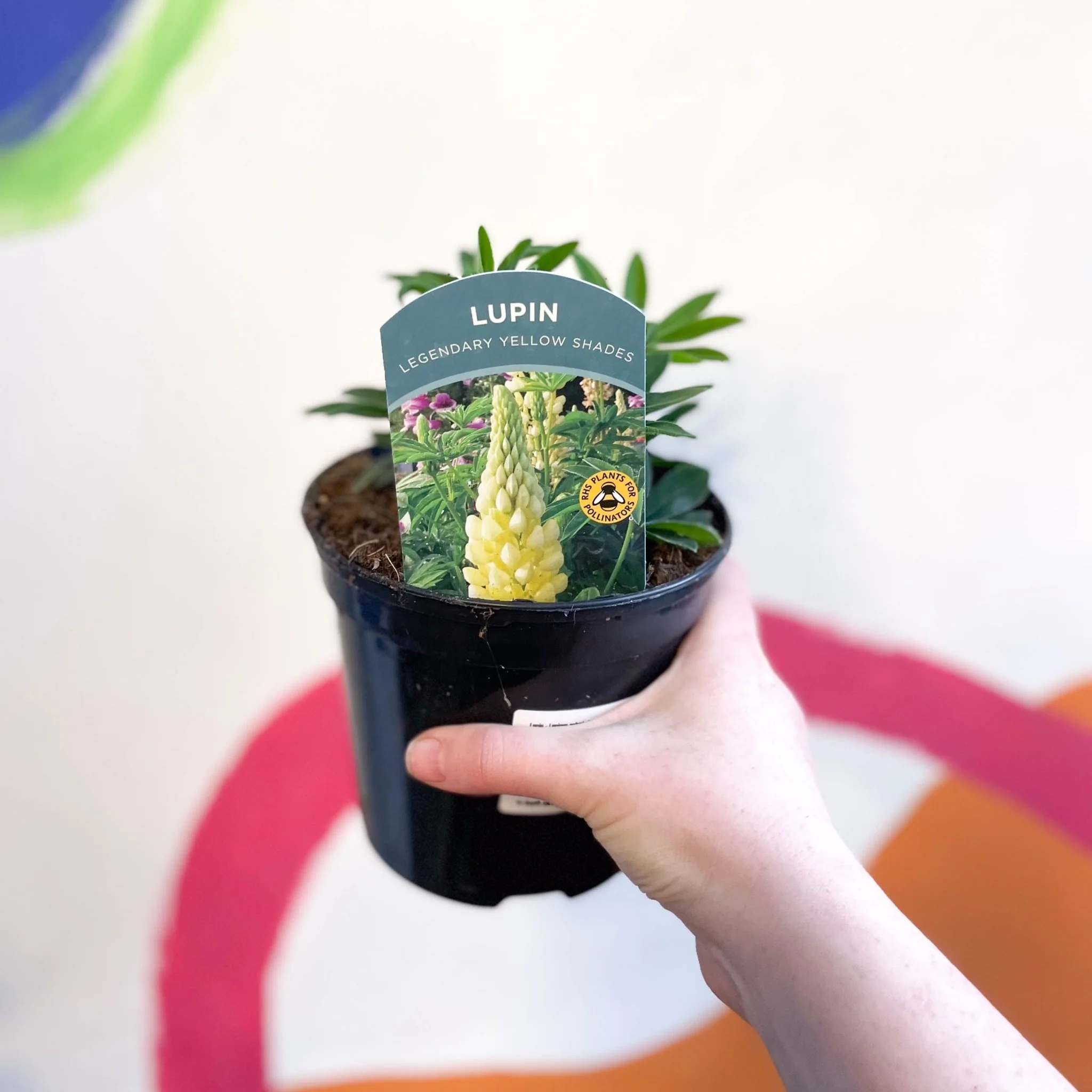
Lupin - Lupinus polyphyllus 'Legendary Yellow Shades' - British Grown Herbaceous Perennial
This perennial flower will produce tall spikes of creamy yellow flowers in late spring to early summer, towering over bright green foliage. Hardy throughout most of the UK down to -20°C.
This perennial may look just green for now, but when it blooms, it produces towers of pale lemon yellow flowers visible across your garden. Plant your Lupin out by April and enjoy the flowering period from May to July, when it will fill your garden with colour, and even attract butterflies. Once the flowers fade, you can deadhead the plant and you may be rewarded with a second round of blooms. The best time to cut back Lupins is October; and don't worry if they disappear at the end of autumn! Herbaceous perennials will die back in winter, only to come back to life and bloom again in spring after this winter dormancy period. Thanks to their height, they will benefit from a sheltered position, perhaps towards the back of a border, where they will reward your care with tall columns of bright summer flowers.
|
Perennial |
Flower: tall stems |
May to July |
Scientific Name
Lupinus polyphyllus 'Legendary Yellow Shades' (wolf's plant with many leaves, variety: Legendary Yellow Shades)
Common Name
Legendary Yellow Lupine
Origin
Native to North America
Pruning Tips
N/A - just cut back after the plant has flowered and seeded
Wildlife Value
Pollinators, including butterflies and especially bumblebees, which love its pollen.
Positioning
Full sun to partial shade
Water
Drought tolerant; no need to manually water as they have long roots and can get enough water that way
Soil
Moist, deep but well-draining and slightly soil is best; Lupins grow much better in the ground than in pots so avoid planting them into containers.
Food
Extra fertilisation not necessary
Pet-safe?
There are toxic elements, so keep paws off this plant!
Sprouts Top Tips
Lupins will self-seed in the garden, so you can collect the seedlings and nurture them to get even more plants- and if you want to clone your plant and have more of the same colour flowers, you can take basal cuttings in the spring.
Slugs and snails love munching lupins so keep an eye out for these slimy critters!
Original: $13.14
-65%$13.14
$4.60Product Information
Product Information
Shipping & Returns
Shipping & Returns
Description
This perennial flower will produce tall spikes of creamy yellow flowers in late spring to early summer, towering over bright green foliage. Hardy throughout most of the UK down to -20°C.
This perennial may look just green for now, but when it blooms, it produces towers of pale lemon yellow flowers visible across your garden. Plant your Lupin out by April and enjoy the flowering period from May to July, when it will fill your garden with colour, and even attract butterflies. Once the flowers fade, you can deadhead the plant and you may be rewarded with a second round of blooms. The best time to cut back Lupins is October; and don't worry if they disappear at the end of autumn! Herbaceous perennials will die back in winter, only to come back to life and bloom again in spring after this winter dormancy period. Thanks to their height, they will benefit from a sheltered position, perhaps towards the back of a border, where they will reward your care with tall columns of bright summer flowers.
|
Perennial |
Flower: tall stems |
May to July |
Scientific Name
Lupinus polyphyllus 'Legendary Yellow Shades' (wolf's plant with many leaves, variety: Legendary Yellow Shades)
Common Name
Legendary Yellow Lupine
Origin
Native to North America
Pruning Tips
N/A - just cut back after the plant has flowered and seeded
Wildlife Value
Pollinators, including butterflies and especially bumblebees, which love its pollen.
Positioning
Full sun to partial shade
Water
Drought tolerant; no need to manually water as they have long roots and can get enough water that way
Soil
Moist, deep but well-draining and slightly soil is best; Lupins grow much better in the ground than in pots so avoid planting them into containers.
Food
Extra fertilisation not necessary
Pet-safe?
There are toxic elements, so keep paws off this plant!
Sprouts Top Tips
Lupins will self-seed in the garden, so you can collect the seedlings and nurture them to get even more plants- and if you want to clone your plant and have more of the same colour flowers, you can take basal cuttings in the spring.
Slugs and snails love munching lupins so keep an eye out for these slimy critters!