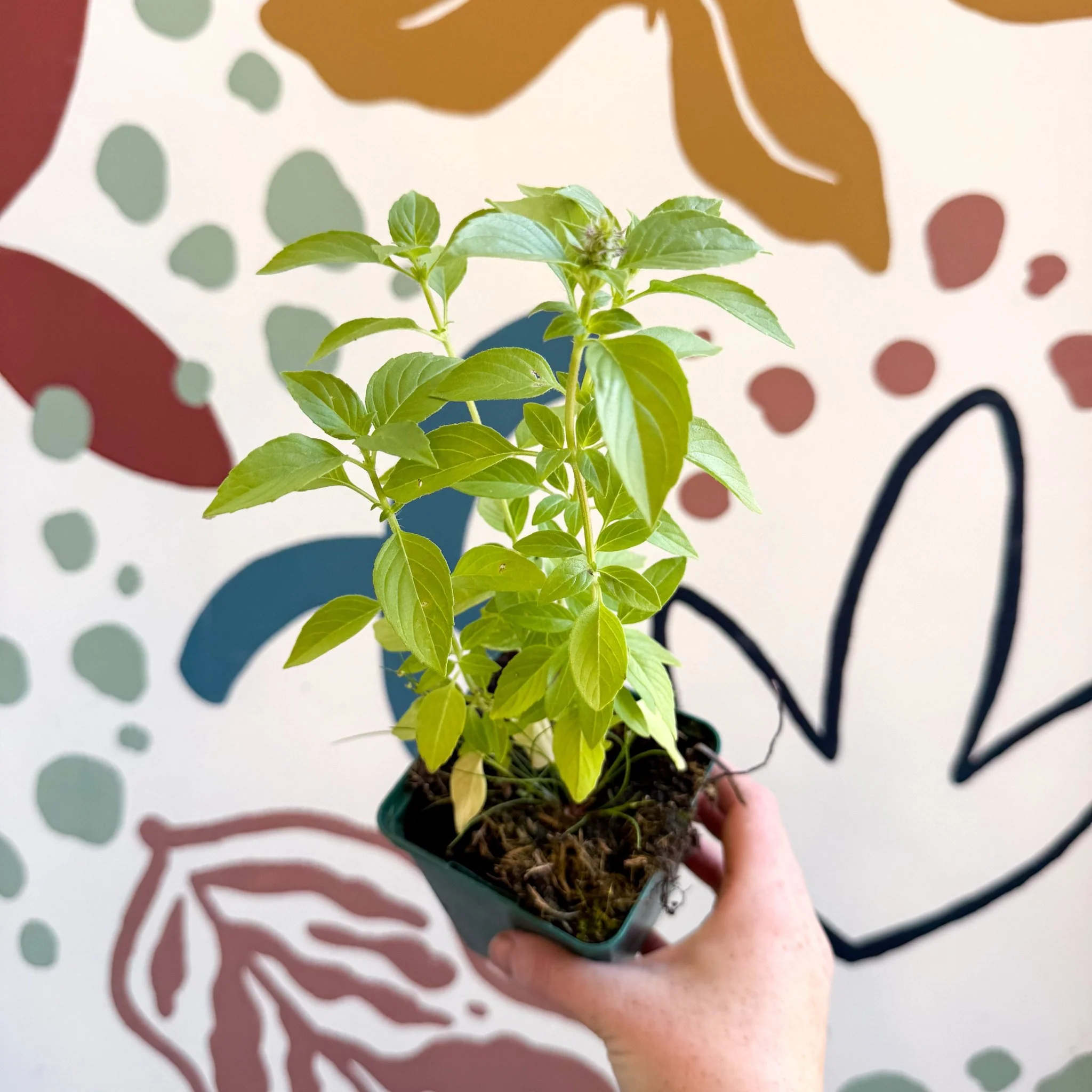
Ocimum basilicum 'Lemon' - Lemon Basil - Cotswolds Grown Culinary Herbs
With its zesty citrus scent and bright green leaves, Ocimum basilicum ‘Lemon’ is a refreshing twist on classic sweet basil. This tender annual has a compact habit and produces small white flowers in mid to late summer if not pinched out. Ideal for pots, herb gardens, or sunny windowsills, it adds a lemony lift to salads, fish dishes, teas, and desserts.
Ocimum basilicum ‘Lemon’, commonly known as Lemon Basil, is grown for its culinary value and uplifting fragrance. Though tender, it’s fast-growing and rewards regular picking with bushier growth.
|
Annual |
Annual |
Flowers: July – September (small white flowers, often removed to prolong leaf production) Foliage: May – October (dependent on sowing time and frost) |
Scientific Name
Ocimum basilicum ‘Lemon’ (cultivar of sweet basil, from Greek okimon, meaning aromatic herb)
Synonyms
Ocimum × africanum (sometimes listed under this hybrid classification)
Common Name
Lemon Basil
Origin
Believed to have originated from a hybrid between Ocimum basilicum and Ocimum americanum, cultivated widely in Southeast Asia and India
Pruning Tips
Pinch out tips regularly to encourage branching and delay flowering. Remove flower buds promptly if growing for leaves
Wildlife Value
Flowers are popular with bees and hoverflies, though most gardeners remove them to prolong foliage harvest
Positioning
Full sun in a warm, sheltered spot – best in containers, raised beds, or near kitchen doors
Water
Keep soil consistently moist but not waterlogged. Water early in the day to avoid fungal issues
Soil
Rich, free-draining soil or compost. Improve with organic matter or composted manure before planting
Food
Feed fortnightly with a balanced liquid fertiliser during active growth
Pet-safe
Generally considered non-toxic to pets
Sprouts Top Tips
Sow successively every few weeks in summer to keep a steady supply of fresh leaves. Bring pots indoors before the first frost or take cuttings to root on the windowsill.
Original: $7.51
-65%$7.51
$2.63Product Information
Product Information
Shipping & Returns
Shipping & Returns
Description
With its zesty citrus scent and bright green leaves, Ocimum basilicum ‘Lemon’ is a refreshing twist on classic sweet basil. This tender annual has a compact habit and produces small white flowers in mid to late summer if not pinched out. Ideal for pots, herb gardens, or sunny windowsills, it adds a lemony lift to salads, fish dishes, teas, and desserts.
Ocimum basilicum ‘Lemon’, commonly known as Lemon Basil, is grown for its culinary value and uplifting fragrance. Though tender, it’s fast-growing and rewards regular picking with bushier growth.
|
Annual |
Annual |
Flowers: July – September (small white flowers, often removed to prolong leaf production) Foliage: May – October (dependent on sowing time and frost) |
Scientific Name
Ocimum basilicum ‘Lemon’ (cultivar of sweet basil, from Greek okimon, meaning aromatic herb)
Synonyms
Ocimum × africanum (sometimes listed under this hybrid classification)
Common Name
Lemon Basil
Origin
Believed to have originated from a hybrid between Ocimum basilicum and Ocimum americanum, cultivated widely in Southeast Asia and India
Pruning Tips
Pinch out tips regularly to encourage branching and delay flowering. Remove flower buds promptly if growing for leaves
Wildlife Value
Flowers are popular with bees and hoverflies, though most gardeners remove them to prolong foliage harvest
Positioning
Full sun in a warm, sheltered spot – best in containers, raised beds, or near kitchen doors
Water
Keep soil consistently moist but not waterlogged. Water early in the day to avoid fungal issues
Soil
Rich, free-draining soil or compost. Improve with organic matter or composted manure before planting
Food
Feed fortnightly with a balanced liquid fertiliser during active growth
Pet-safe
Generally considered non-toxic to pets
Sprouts Top Tips
Sow successively every few weeks in summer to keep a steady supply of fresh leaves. Bring pots indoors before the first frost or take cuttings to root on the windowsill.