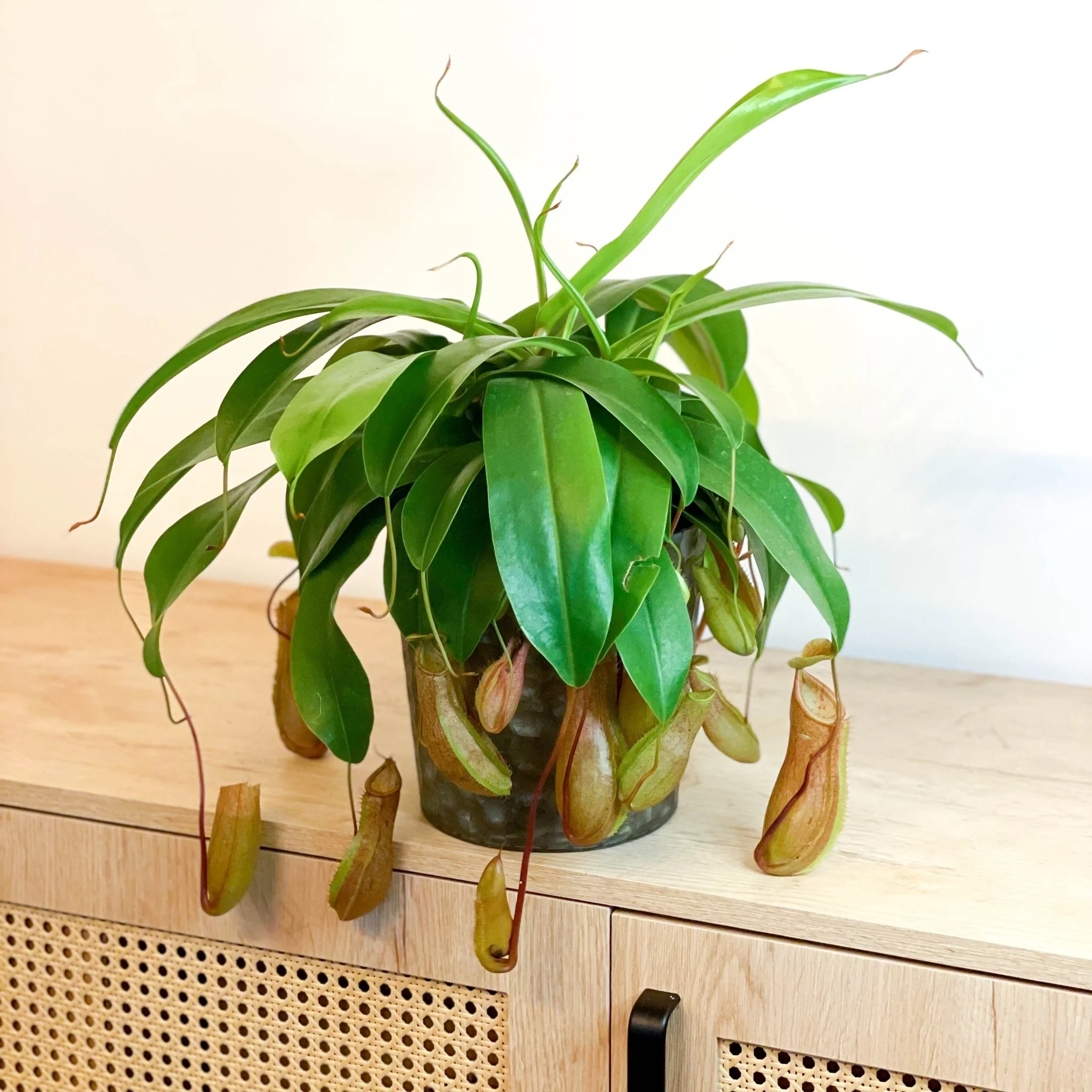
Nepenthes ‘Alata’ – Tropical Pitcher Plant
This striking carnivorous houseplant produces elegant, hanging pitchers that develop from the tips of its leaves, designed to trap insects naturally. Often sold as Nepenthes alata, this plant is actually a hardy hybrid commonly grown for its reliability and adaptability in the home. With its lush green foliage and sculptural pitchers, it makes a fascinating and unusual addition to bright indoor spaces.
Scientific Name
Nepenthes ‘Alata’
(Commonly used trade name for a cultivated hybrid, often associated with Nepenthes × ventrata)
Common Name
Tropical Pitcher Plant
Origin
Hybrid derived from tropical Nepenthes species native to Southeast Asia.
Light
Bright, indirect light. Avoid harsh direct sun, which can scorch the leaves, but ensure enough light to encourage pitcher formation.
Water
Keep the compost consistently moist but never waterlogged. Use only rainwater, distilled water, or deionised water. Do not allow the plant to dry out.
Humidity
Prefers higher humidity. Pitchers develop best in humid rooms such as kitchens or bathrooms, though normal household humidity is usually sufficient.
Soil
Grown in a specialist carnivorous plant compost, typically sphagnum-based with added bark for drainage. Never use standard houseplant compost.
Food
Do not fertilise. Pitchers naturally trap insects for nutrients. Never feed manually or add fertiliser.
Temperature
Ideal range is 18–28°C. Avoid cold draughts and temperatures below 12°C.
Pet-safe
Non-toxic, but pitchers can trap insects. Keep out of reach of curious pets.
Sprouts Top Tips
If pitchers fail to form, increase light levels slightly before adjusting watering.
Original: $22.53
-65%$22.53
$7.89Product Information
Product Information
Shipping & Returns
Shipping & Returns
Description
This striking carnivorous houseplant produces elegant, hanging pitchers that develop from the tips of its leaves, designed to trap insects naturally. Often sold as Nepenthes alata, this plant is actually a hardy hybrid commonly grown for its reliability and adaptability in the home. With its lush green foliage and sculptural pitchers, it makes a fascinating and unusual addition to bright indoor spaces.
Scientific Name
Nepenthes ‘Alata’
(Commonly used trade name for a cultivated hybrid, often associated with Nepenthes × ventrata)
Common Name
Tropical Pitcher Plant
Origin
Hybrid derived from tropical Nepenthes species native to Southeast Asia.
Light
Bright, indirect light. Avoid harsh direct sun, which can scorch the leaves, but ensure enough light to encourage pitcher formation.
Water
Keep the compost consistently moist but never waterlogged. Use only rainwater, distilled water, or deionised water. Do not allow the plant to dry out.
Humidity
Prefers higher humidity. Pitchers develop best in humid rooms such as kitchens or bathrooms, though normal household humidity is usually sufficient.
Soil
Grown in a specialist carnivorous plant compost, typically sphagnum-based with added bark for drainage. Never use standard houseplant compost.
Food
Do not fertilise. Pitchers naturally trap insects for nutrients. Never feed manually or add fertiliser.
Temperature
Ideal range is 18–28°C. Avoid cold draughts and temperatures below 12°C.
Pet-safe
Non-toxic, but pitchers can trap insects. Keep out of reach of curious pets.
Sprouts Top Tips
If pitchers fail to form, increase light levels slightly before adjusting watering.