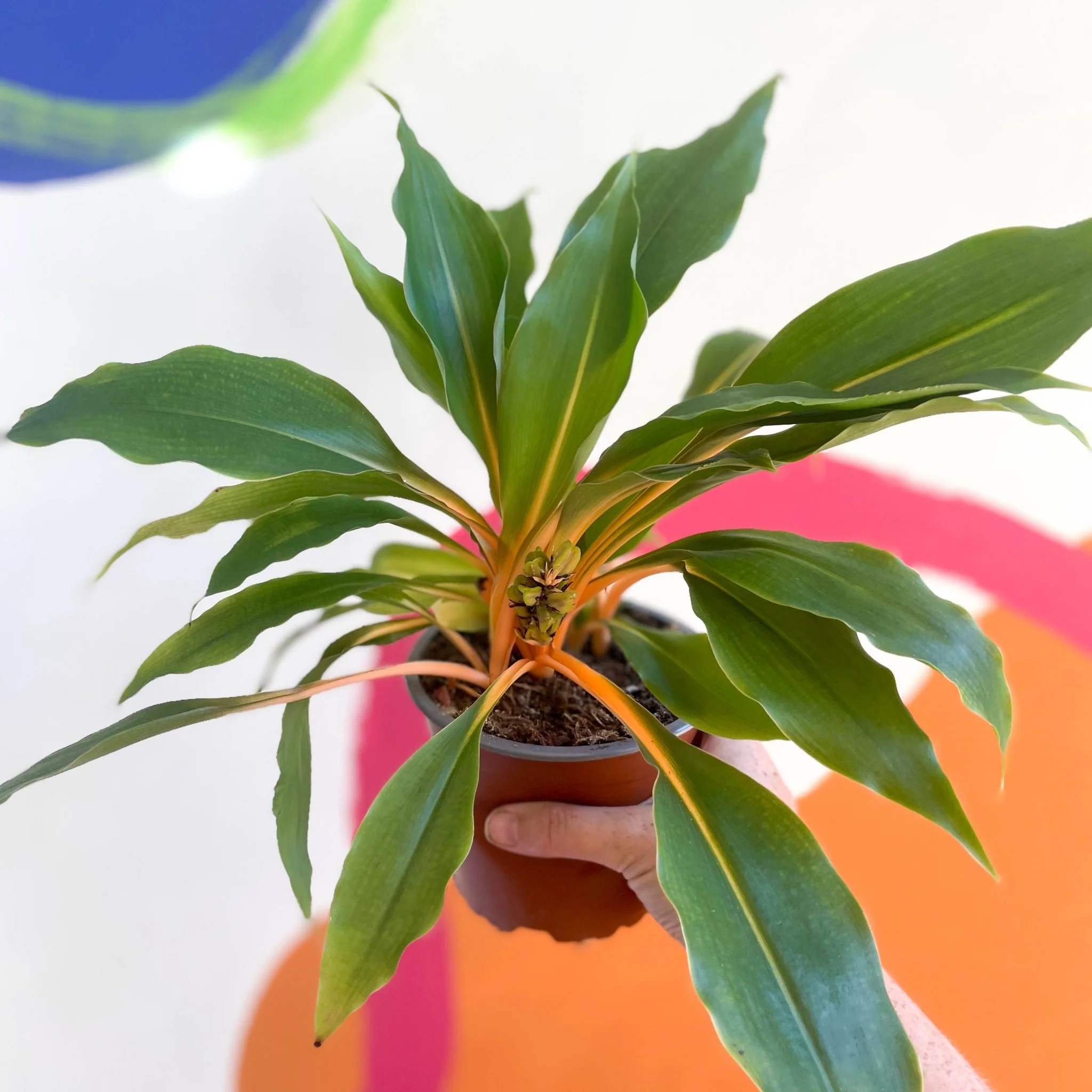
Chlorophytum orchidastrum – Fire Flash / Orange Spider Plant
The Fire Flash is a bold and slightly unexpected take on the classic spider plant. Instead of trailing babies, it forms an upright rosette of glossy green leaves with striking, fiery orange stems that almost glow in the right light. It brings a vibrant pop of colour without being fussy, making it a brilliant statement for shelves, desks, or anywhere that needs a lift.
Scientific Name
Chlorophytum orchidastrum (orchid-like Chlorophytum)
Common Name
Fire Flash, Orange Spider Plant, Green Orange Spider Plant
Origin
Native to tropical regions of Africa, particularly found in countries such as Tanzania and Kenya
Light
Prefers bright, indirect light to keep those orange stems vibrant. It will tolerate lower light, but colour may fade and growth will slow. Avoid harsh direct sun, which can scorch the leaves
Water
Allow the top couple of centimetres of soil to dry out between waterings. Keep lightly moist during the growing season, but reduce watering in winter. It is more forgiving of slight underwatering than sitting in soggy soil
Humidity
Enjoys moderate humidity but will cope well in typical UK homes. If the air is particularly dry, occasional misting or placing near a humidifier will help keep the foliage looking its best
Soil
Use a well-draining houseplant compost. A mix with added perlite or bark works well to prevent waterlogging while still holding some moisture
Food
Feed once a month during spring and summer with a balanced liquid fertiliser. Reduce feeding in autumn and stop in winter when growth slows
Temperature
Thrives in temperatures between 18–26°C. Avoid temperatures below 10–12°C and keep away from cold draughts
Pet-safe
Generally considered non-toxic, but best kept out of reach of curious pets as ingestion may still cause mild stomach upset
Sprouts Top Tips
If the orange colour starts to fade, it is almost always a sign the plant needs more light. Move it to a brighter spot and the colour should deepen again over time
Extras
Unlike other spider plants, this variety rarely produces plantlets, so propagation is usually done by division when repotting
Did You Know?
Despite its common name, the Fire Flash is quite different from the traditional spider plant (Chlorophytum comosum) and is grown more for its striking stem colour than its trailing habit
Product Information
Product Information
Shipping & Returns
Shipping & Returns
Description
The Fire Flash is a bold and slightly unexpected take on the classic spider plant. Instead of trailing babies, it forms an upright rosette of glossy green leaves with striking, fiery orange stems that almost glow in the right light. It brings a vibrant pop of colour without being fussy, making it a brilliant statement for shelves, desks, or anywhere that needs a lift.
Scientific Name
Chlorophytum orchidastrum (orchid-like Chlorophytum)
Common Name
Fire Flash, Orange Spider Plant, Green Orange Spider Plant
Origin
Native to tropical regions of Africa, particularly found in countries such as Tanzania and Kenya
Light
Prefers bright, indirect light to keep those orange stems vibrant. It will tolerate lower light, but colour may fade and growth will slow. Avoid harsh direct sun, which can scorch the leaves
Water
Allow the top couple of centimetres of soil to dry out between waterings. Keep lightly moist during the growing season, but reduce watering in winter. It is more forgiving of slight underwatering than sitting in soggy soil
Humidity
Enjoys moderate humidity but will cope well in typical UK homes. If the air is particularly dry, occasional misting or placing near a humidifier will help keep the foliage looking its best
Soil
Use a well-draining houseplant compost. A mix with added perlite or bark works well to prevent waterlogging while still holding some moisture
Food
Feed once a month during spring and summer with a balanced liquid fertiliser. Reduce feeding in autumn and stop in winter when growth slows
Temperature
Thrives in temperatures between 18–26°C. Avoid temperatures below 10–12°C and keep away from cold draughts
Pet-safe
Generally considered non-toxic, but best kept out of reach of curious pets as ingestion may still cause mild stomach upset
Sprouts Top Tips
If the orange colour starts to fade, it is almost always a sign the plant needs more light. Move it to a brighter spot and the colour should deepen again over time
Extras
Unlike other spider plants, this variety rarely produces plantlets, so propagation is usually done by division when repotting
Did You Know?
Despite its common name, the Fire Flash is quite different from the traditional spider plant (Chlorophytum comosum) and is grown more for its striking stem colour than its trailing habit