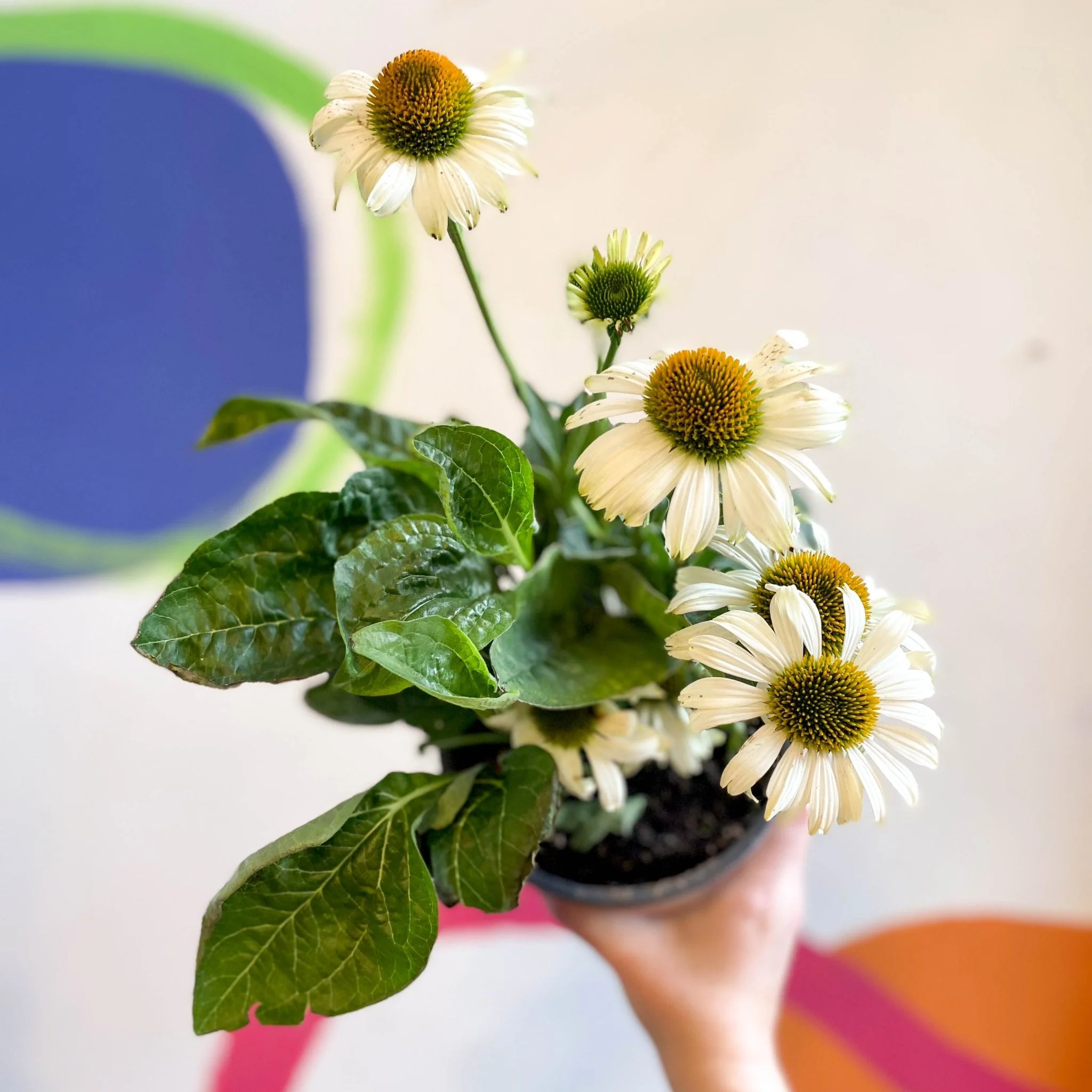
Echinacea 'Sombrero Blanco' - White Coneflower
These cone-shaped flowers have an array of white petals fanning back from their large, pollinator-friendly middles. Hardy throughout most of the UK, down to -15°C.
These Perennial flowering plants delight with both verdant foliage and bright flowers. In late summer, you'll be treated to the Echinacea's palm-sized blooms. This plant can spread un to half a metre wide and 60cm tall, so over a few years you can fill a corner of your flowerbed with these lovely blooms. Plus, they don't need any pruning, staying compac and doing their thing nicely. You can trim back spent flowers to keep it looking tidy and encourage more flowers to grow if that appeals too. Just make sure this plant will get plenty of sun, and that its soil will drain well, and you're in for a winner!
|
Perennial |
Flower with clump-forming foliage |
Flowers July - September, foliage spring to autumn. |
Scientific Name
Echinacea x hybrida 'Sombrero Blanco' (plant like a hedgehog / sea urchin, hybrid species, cultivar: white hat)
Common Name
Coneflower, Cone Flower
Origin
Native to Eastern and Central North America
Pruning Tips
Cut back spent flowers to encourage more flowers to bloom.
Wildlife Value
These flowers are loved by bees and butterflies
Positioning
Full sun, can tolerate partial shade. Can grow in either exposed or sheltered conditions.
Water
Drought tolerant, but water when first planted
Soil
Use well-draining soil for your Coneflower. It can grow well in chalky, sandy and loamy soils.
Food
Your Coneflower shouldn't need too much extra nutrition; an annual mulch of the soil will help keep it heppy and nourished.
Pet-safe
Yes- no toxicity reported, though it's best for the plant and your pets if they don't nibble too much!
Sprouts Top Tips
These plants don't like too much disturbance, but if you want to divide them you can split the roots in spring or autumn. If you aren't worried about them looking exactly the same, the plant will be happy with you collecting seeds after it finishes flowering and goes to seed in autumn.
Original: $15.02
-65%$15.02
$5.26Product Information
Product Information
Shipping & Returns
Shipping & Returns
Description
These cone-shaped flowers have an array of white petals fanning back from their large, pollinator-friendly middles. Hardy throughout most of the UK, down to -15°C.
These Perennial flowering plants delight with both verdant foliage and bright flowers. In late summer, you'll be treated to the Echinacea's palm-sized blooms. This plant can spread un to half a metre wide and 60cm tall, so over a few years you can fill a corner of your flowerbed with these lovely blooms. Plus, they don't need any pruning, staying compac and doing their thing nicely. You can trim back spent flowers to keep it looking tidy and encourage more flowers to grow if that appeals too. Just make sure this plant will get plenty of sun, and that its soil will drain well, and you're in for a winner!
|
Perennial |
Flower with clump-forming foliage |
Flowers July - September, foliage spring to autumn. |
Scientific Name
Echinacea x hybrida 'Sombrero Blanco' (plant like a hedgehog / sea urchin, hybrid species, cultivar: white hat)
Common Name
Coneflower, Cone Flower
Origin
Native to Eastern and Central North America
Pruning Tips
Cut back spent flowers to encourage more flowers to bloom.
Wildlife Value
These flowers are loved by bees and butterflies
Positioning
Full sun, can tolerate partial shade. Can grow in either exposed or sheltered conditions.
Water
Drought tolerant, but water when first planted
Soil
Use well-draining soil for your Coneflower. It can grow well in chalky, sandy and loamy soils.
Food
Your Coneflower shouldn't need too much extra nutrition; an annual mulch of the soil will help keep it heppy and nourished.
Pet-safe
Yes- no toxicity reported, though it's best for the plant and your pets if they don't nibble too much!
Sprouts Top Tips
These plants don't like too much disturbance, but if you want to divide them you can split the roots in spring or autumn. If you aren't worried about them looking exactly the same, the plant will be happy with you collecting seeds after it finishes flowering and goes to seed in autumn.