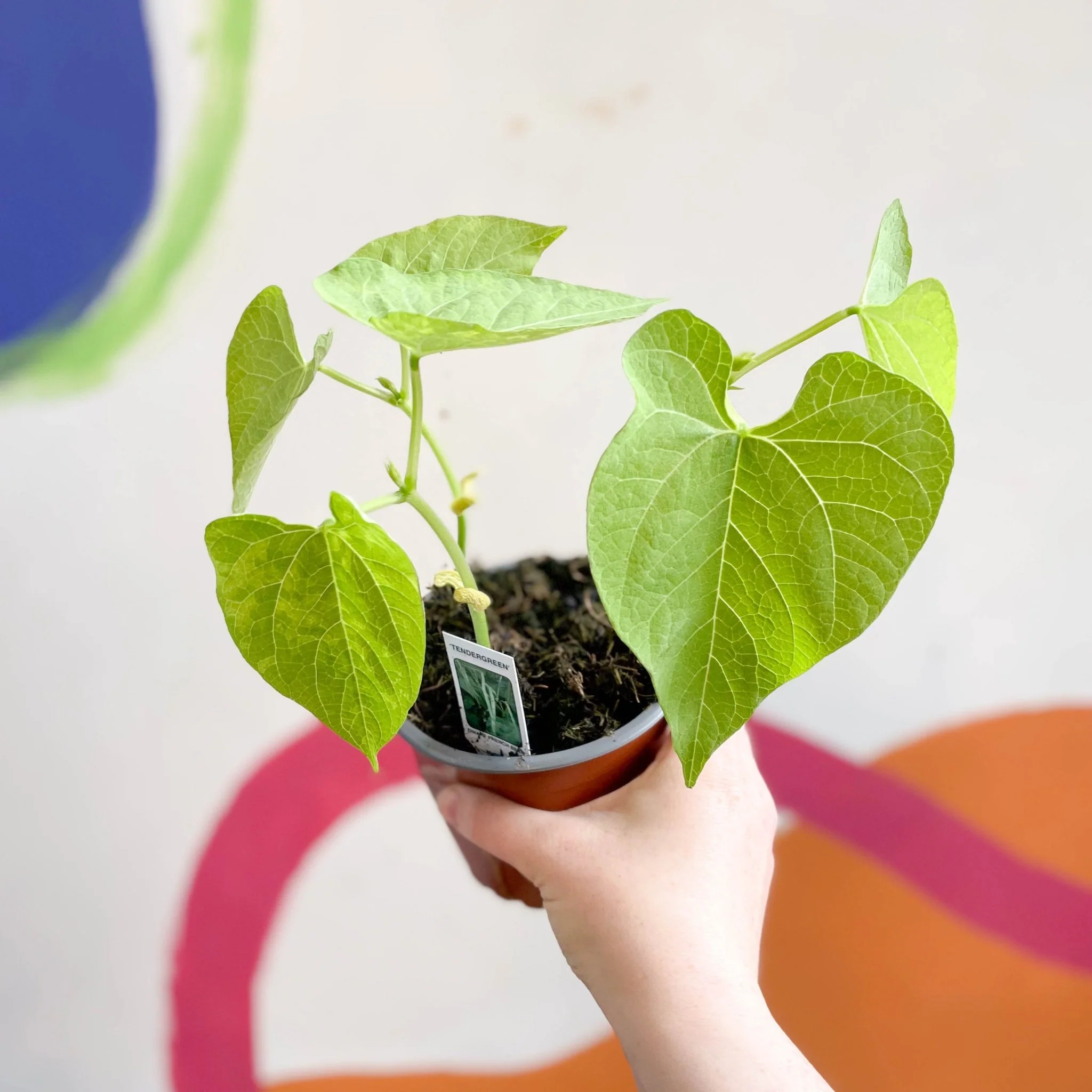
Phaseolus vulgaris 'Tendergreen' - Dwarf French Bean [British Grown]
A vegetable plant which will give you an early crop of French beans, with harvests as early as June. Half-hardy in the UK, they are usually grown as an annual here.
Grow your own French beans with this early-cropping variety! Great for freezing too, this variety can give you food fresh from the vine and from-frozen months later. The pods themselves are pale green with purple speckles (which disappear when cooked) and will add flavour to your cooking as well as interest to your garden. Its sturdy stems are self-supporting, and grow tall before flowering and producing pods of beans. It is also a dwarf variety whose compact nature means supports are not necessary and it is suited to small spaces and container growing.
|
Annual |
Vegetable: Sturdy stems |
Harvest June to September; foliage spring to autumn, flowers late spring to early summer. |
Scientific Name
Phaseolus vulgaris (common bean) 'Tendergreen'
Common Name
Dwarf French Bean, Tendergreen French Bean
Origin
Native to cooler, high altitude areas in central & northern parts of South America
Pruning Tips
It's a good idea to grow up a support; prune back shoots that grow over the top to encourage side shoots lower down. And don't forget to harvest the beans! This will encourage more to grow as well as filling your plate. Pick the pods when they are young, tender and stringless, and harvest every few days to make sure you harvest at the right time. If you let the pods get too mature, the plant will stop producing new fruit.
Wildlife Value
This plant is self-pollinating and doesn't usually need help from insects.
Positioning
Full sun is best for the French Bean
Water
This plant has shallow roots, so needs water a couple of times a week; in dry weather, make sure you step up and water them!
Soil
Use a humus-rich, moisture retentive soil. Fork lots of fresh compost into the ground a couple of weeks before planting for best results.
Food
Dig over and add plenty of fresh compost before planting to ensure enough nutrients are present in the soil. Add a layer of mulch in July to help keep the soil moist.
Pet-safe
No; the pods can be harmful to both pets and humans if eaten raw.
Sprouts Top Tips
These plants have been reared from seed indoors, so keep growing them in a bright, warm indoor spot until the risk of frost has fully passed (here in Bristol, this is late May); after that, they will do best in the ground or in a large container, in a sheltered, sunny spot. They have shallow roots, so make sure they get extra water in dry spells.
Product Information
Product Information
Shipping & Returns
Shipping & Returns
Description
A vegetable plant which will give you an early crop of French beans, with harvests as early as June. Half-hardy in the UK, they are usually grown as an annual here.
Grow your own French beans with this early-cropping variety! Great for freezing too, this variety can give you food fresh from the vine and from-frozen months later. The pods themselves are pale green with purple speckles (which disappear when cooked) and will add flavour to your cooking as well as interest to your garden. Its sturdy stems are self-supporting, and grow tall before flowering and producing pods of beans. It is also a dwarf variety whose compact nature means supports are not necessary and it is suited to small spaces and container growing.
|
Annual |
Vegetable: Sturdy stems |
Harvest June to September; foliage spring to autumn, flowers late spring to early summer. |
Scientific Name
Phaseolus vulgaris (common bean) 'Tendergreen'
Common Name
Dwarf French Bean, Tendergreen French Bean
Origin
Native to cooler, high altitude areas in central & northern parts of South America
Pruning Tips
It's a good idea to grow up a support; prune back shoots that grow over the top to encourage side shoots lower down. And don't forget to harvest the beans! This will encourage more to grow as well as filling your plate. Pick the pods when they are young, tender and stringless, and harvest every few days to make sure you harvest at the right time. If you let the pods get too mature, the plant will stop producing new fruit.
Wildlife Value
This plant is self-pollinating and doesn't usually need help from insects.
Positioning
Full sun is best for the French Bean
Water
This plant has shallow roots, so needs water a couple of times a week; in dry weather, make sure you step up and water them!
Soil
Use a humus-rich, moisture retentive soil. Fork lots of fresh compost into the ground a couple of weeks before planting for best results.
Food
Dig over and add plenty of fresh compost before planting to ensure enough nutrients are present in the soil. Add a layer of mulch in July to help keep the soil moist.
Pet-safe
No; the pods can be harmful to both pets and humans if eaten raw.
Sprouts Top Tips
These plants have been reared from seed indoors, so keep growing them in a bright, warm indoor spot until the risk of frost has fully passed (here in Bristol, this is late May); after that, they will do best in the ground or in a large container, in a sheltered, sunny spot. They have shallow roots, so make sure they get extra water in dry spells.