Calathea ‘Stella’
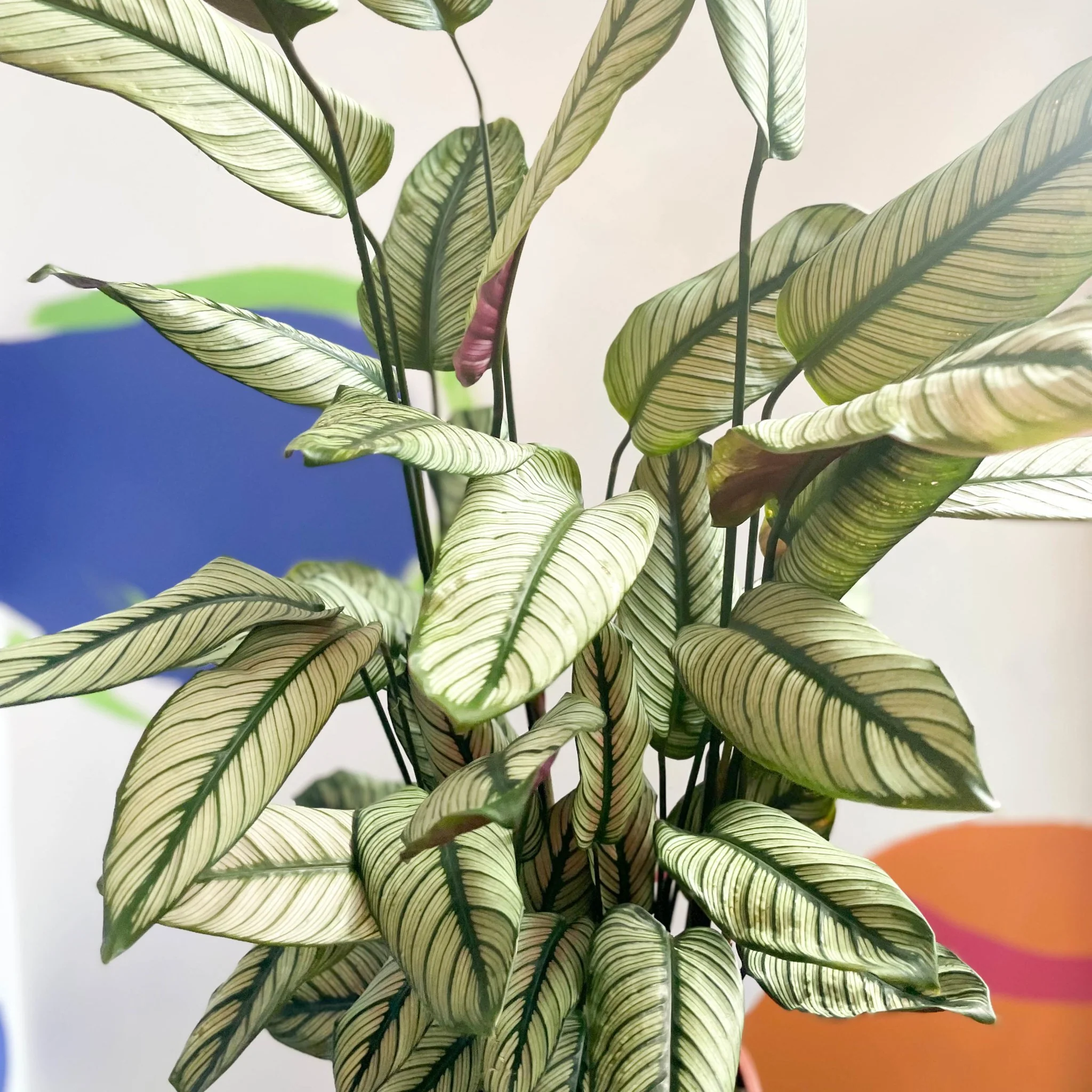
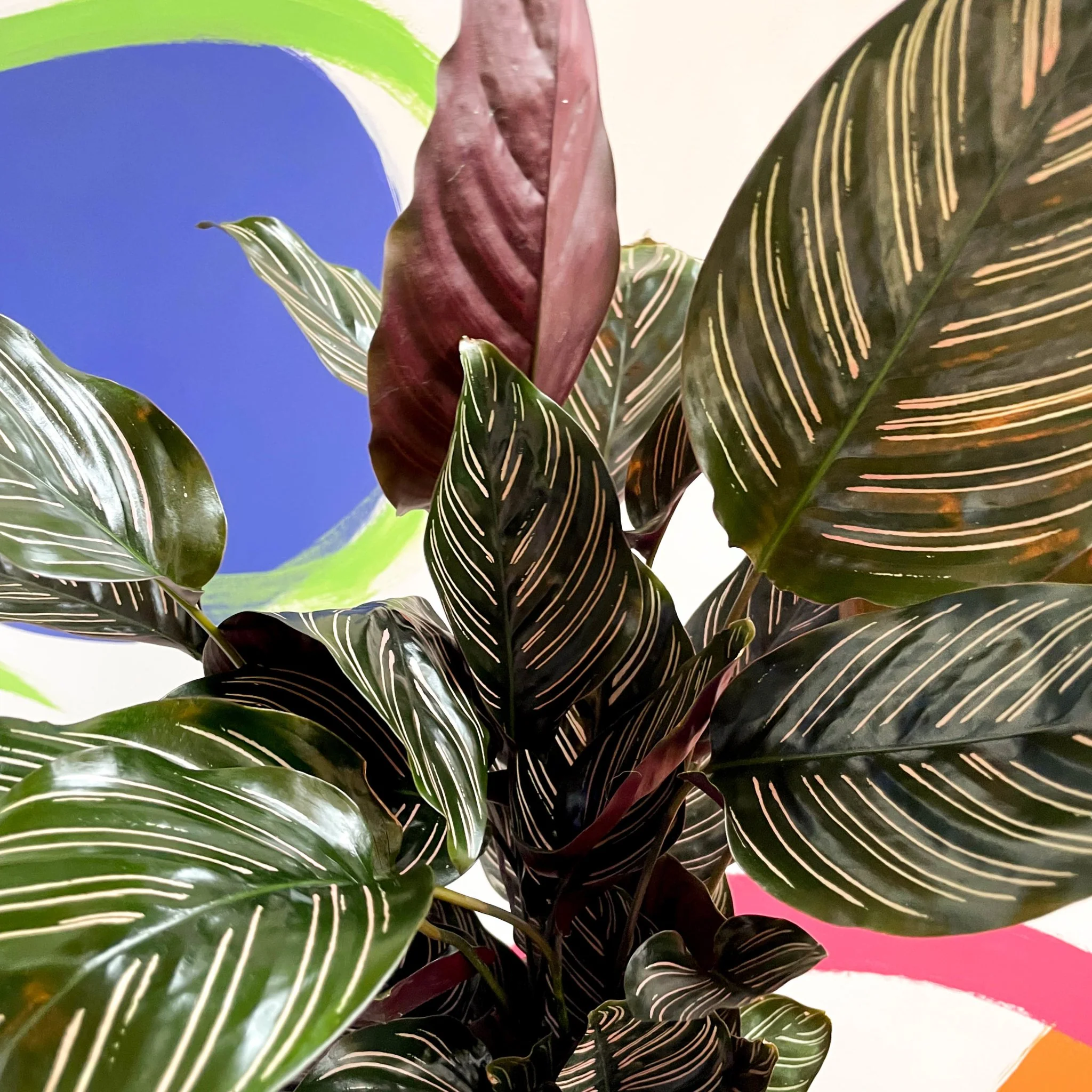
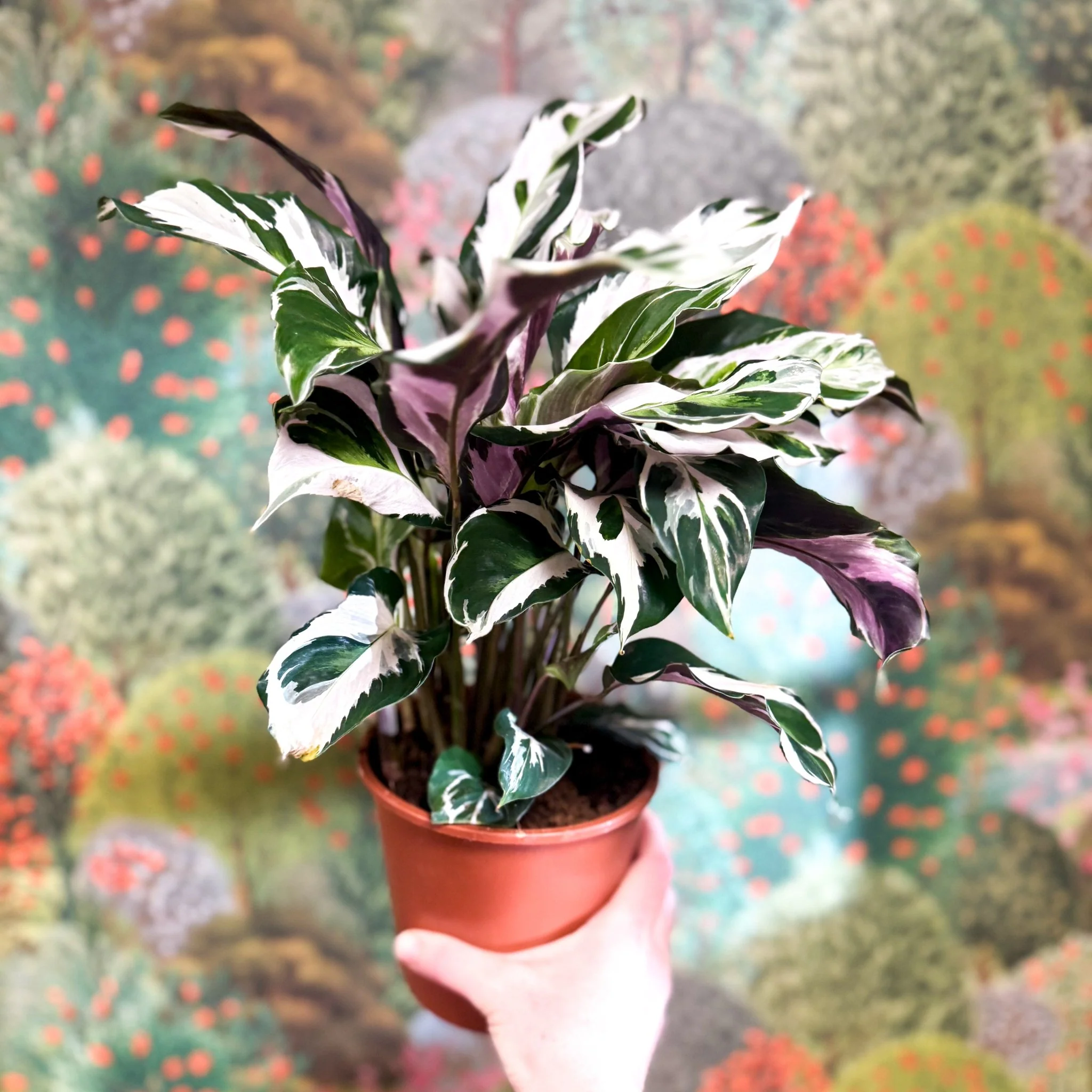
Elegant and luminous, Calathea ‘Stella’ is loved for its soft, painterly variegation in shades of creamy white and green. Its gently striped foliage catches the light beautifully, bringing a calm, fresh feel to any space. Compared to some of the more temperamental varieties, Stella is often a little more forgiving, making it a great choice for anyone wanting that classic Calathea look without quite as much fuss.
Scientific Name
Goeppertia ‘Stella’ (ornamental cultivar, formerly classified within Calathea)
Synonyms
Previously sold under Calathea ‘Stella’ due to reclassification of the genus
Common Name
Calathea Stella, Prayer Plant
Origin
Cultivar derived from tropical Goeppertia species native to South America
Light
Prefers bright, indirect light. Avoid direct sun, which can scorch the delicate variegated leaves. Lower light is tolerated but may reduce vibrancy
Water
Keep the soil consistently lightly moist but not soggy. Allow the top layer to dry slightly between waterings. Reduce watering in winter, but do not let it dry out completely
Humidity
Thrives in higher humidity. Ideal for bathrooms, kitchens, or near a humidifier. In drier homes, a pebble tray can help maintain moisture in the air
Soil
Use a well-draining houseplant mix with added perlite or bark to keep airflow around the roots while retaining some moisture
Food
Feed every 2–4 weeks during the growing season with a diluted balanced fertiliser. Reduce feeding in autumn and winter
Temperature
Prefers temperatures between 18–27°C. Avoid temperatures below 15°C and keep away from cold drafts
Pet-safe
Generally considered non-toxic, but not intended for consumption
Sprouts Top Tips
If the leaf edges start to crisp, it’s usually a sign of dry air or inconsistent watering. Keep both humidity and watering steady for best results.
Product Information
Product Information
Shipping & Returns
Shipping & Returns
Description
Elegant and luminous, Calathea ‘Stella’ is loved for its soft, painterly variegation in shades of creamy white and green. Its gently striped foliage catches the light beautifully, bringing a calm, fresh feel to any space. Compared to some of the more temperamental varieties, Stella is often a little more forgiving, making it a great choice for anyone wanting that classic Calathea look without quite as much fuss.
Scientific Name
Goeppertia ‘Stella’ (ornamental cultivar, formerly classified within Calathea)
Synonyms
Previously sold under Calathea ‘Stella’ due to reclassification of the genus
Common Name
Calathea Stella, Prayer Plant
Origin
Cultivar derived from tropical Goeppertia species native to South America
Light
Prefers bright, indirect light. Avoid direct sun, which can scorch the delicate variegated leaves. Lower light is tolerated but may reduce vibrancy
Water
Keep the soil consistently lightly moist but not soggy. Allow the top layer to dry slightly between waterings. Reduce watering in winter, but do not let it dry out completely
Humidity
Thrives in higher humidity. Ideal for bathrooms, kitchens, or near a humidifier. In drier homes, a pebble tray can help maintain moisture in the air
Soil
Use a well-draining houseplant mix with added perlite or bark to keep airflow around the roots while retaining some moisture
Food
Feed every 2–4 weeks during the growing season with a diluted balanced fertiliser. Reduce feeding in autumn and winter
Temperature
Prefers temperatures between 18–27°C. Avoid temperatures below 15°C and keep away from cold drafts
Pet-safe
Generally considered non-toxic, but not intended for consumption
Sprouts Top Tips
If the leaf edges start to crisp, it’s usually a sign of dry air or inconsistent watering. Keep both humidity and watering steady for best results.