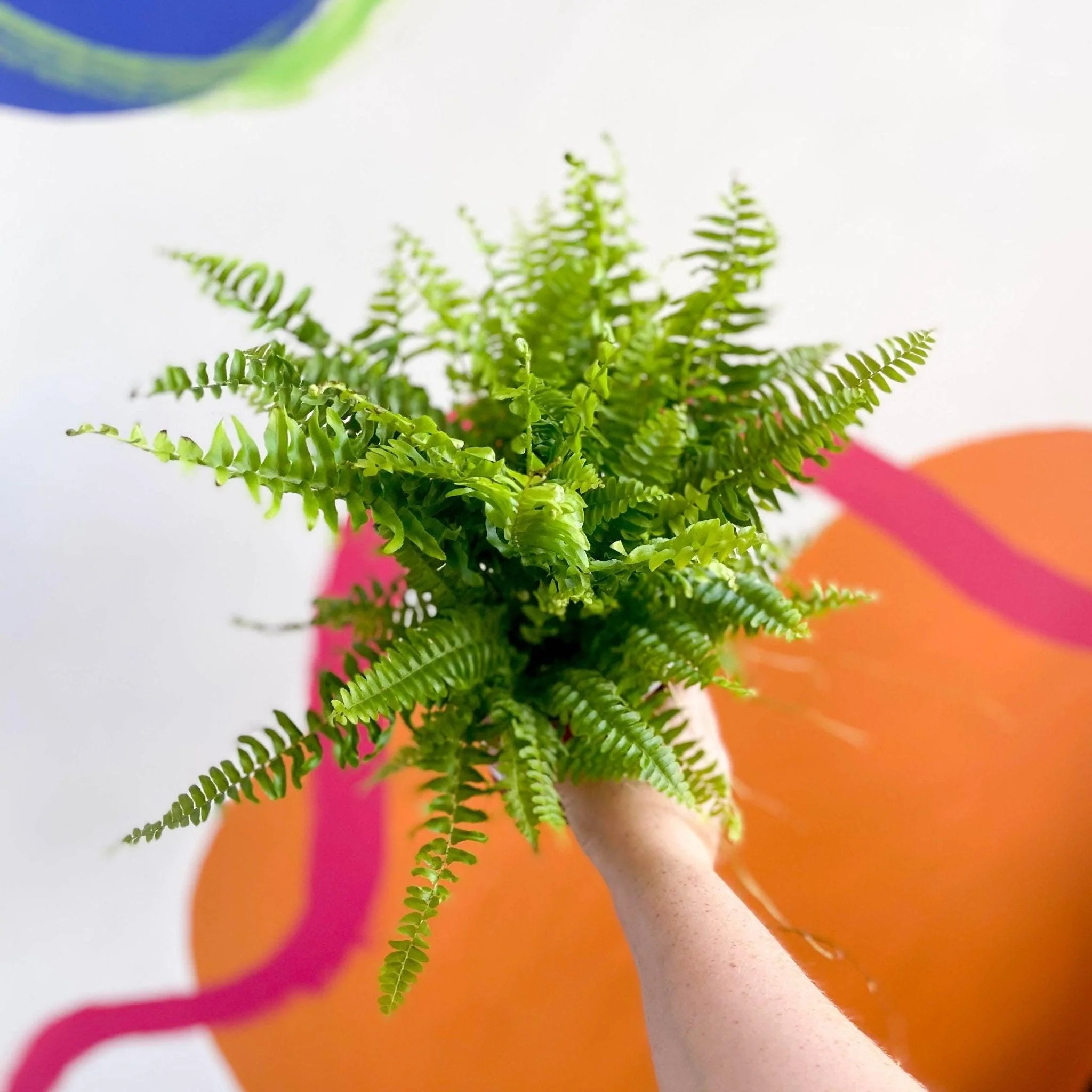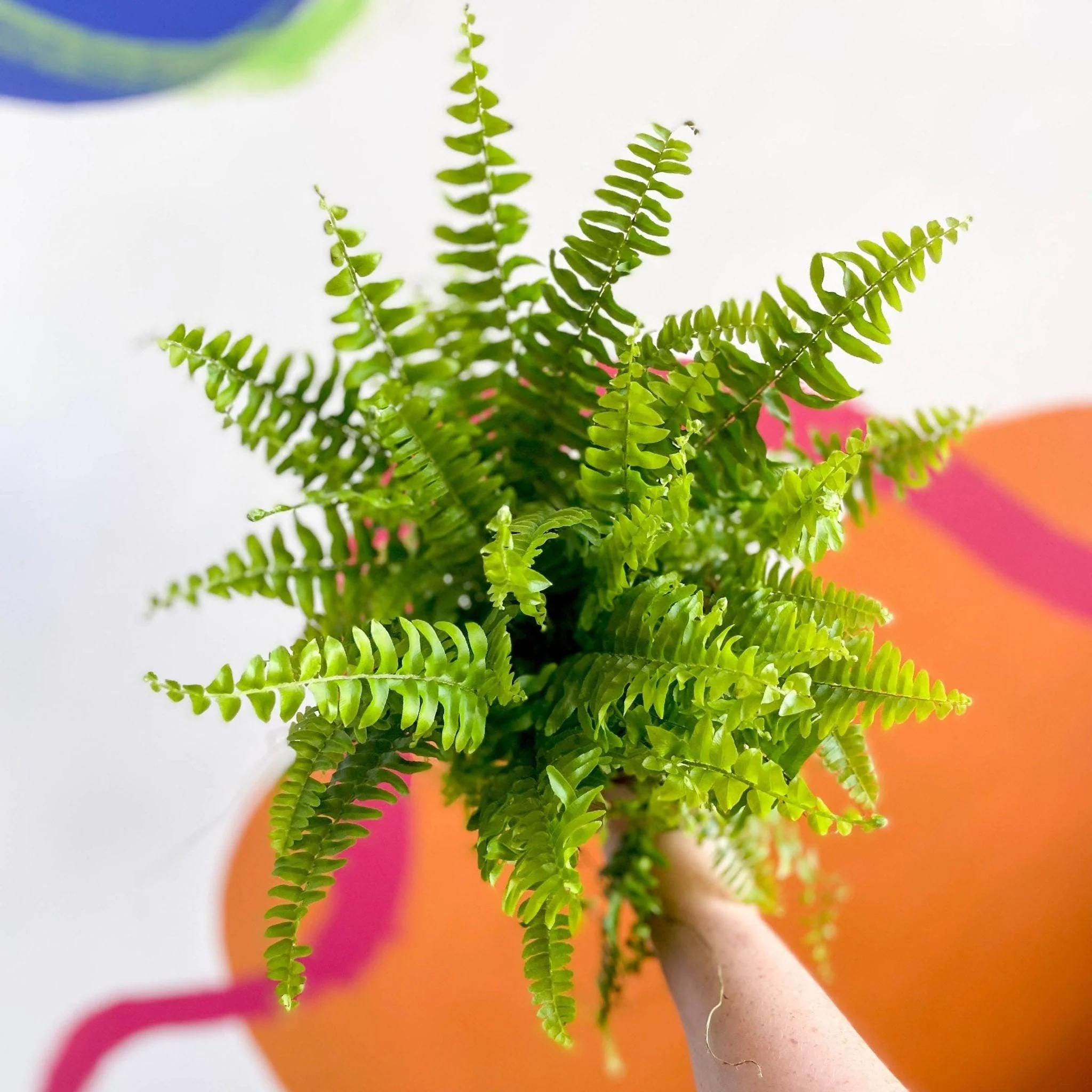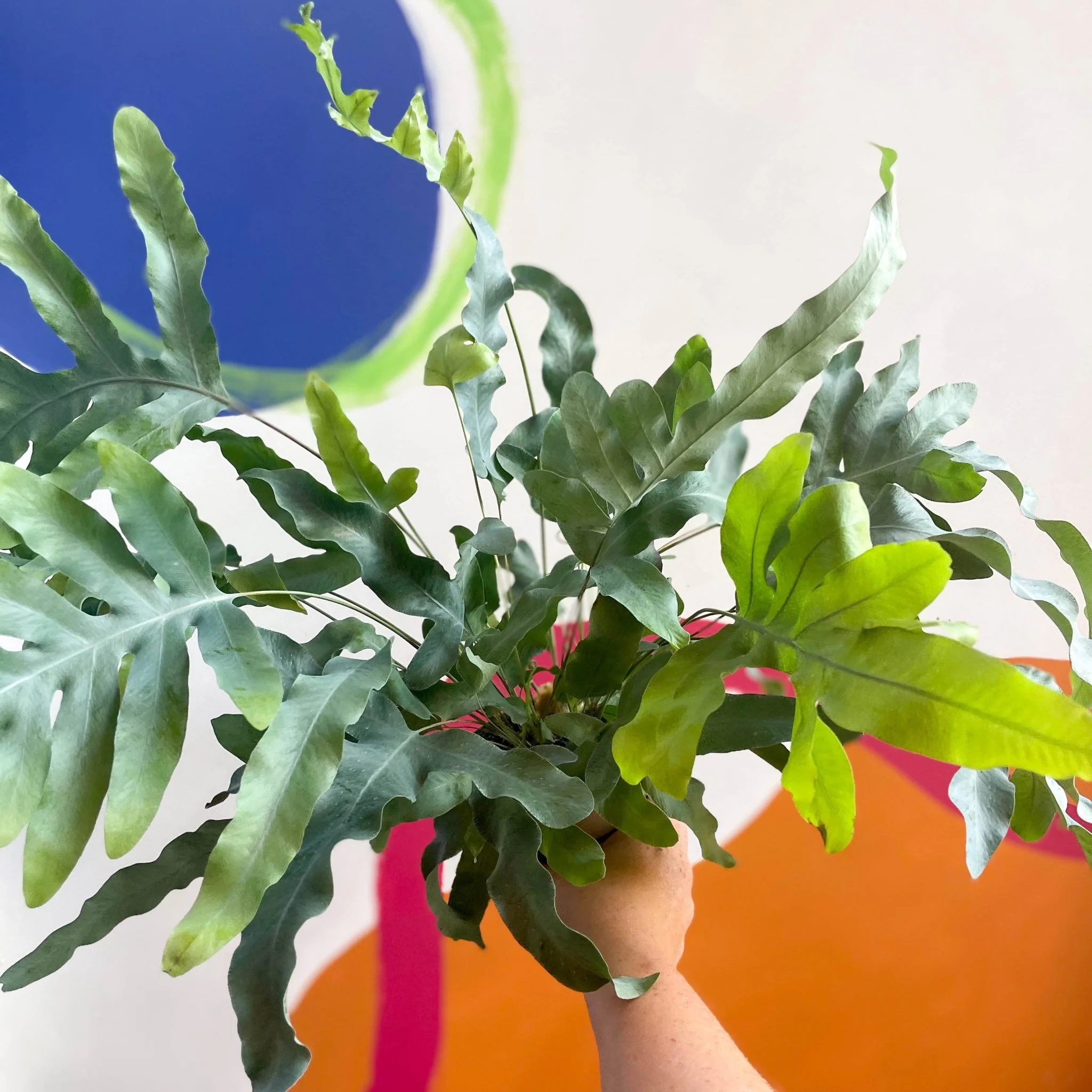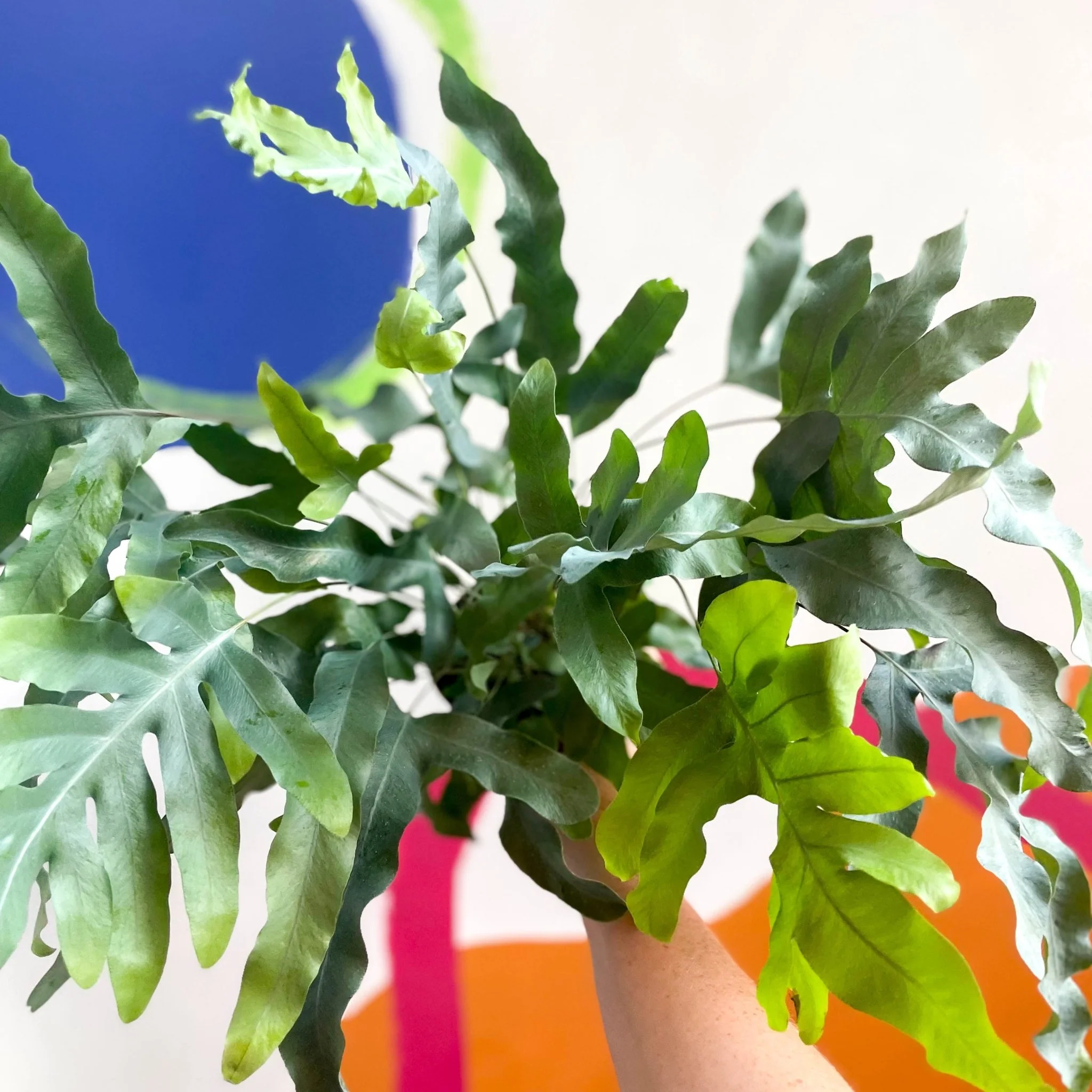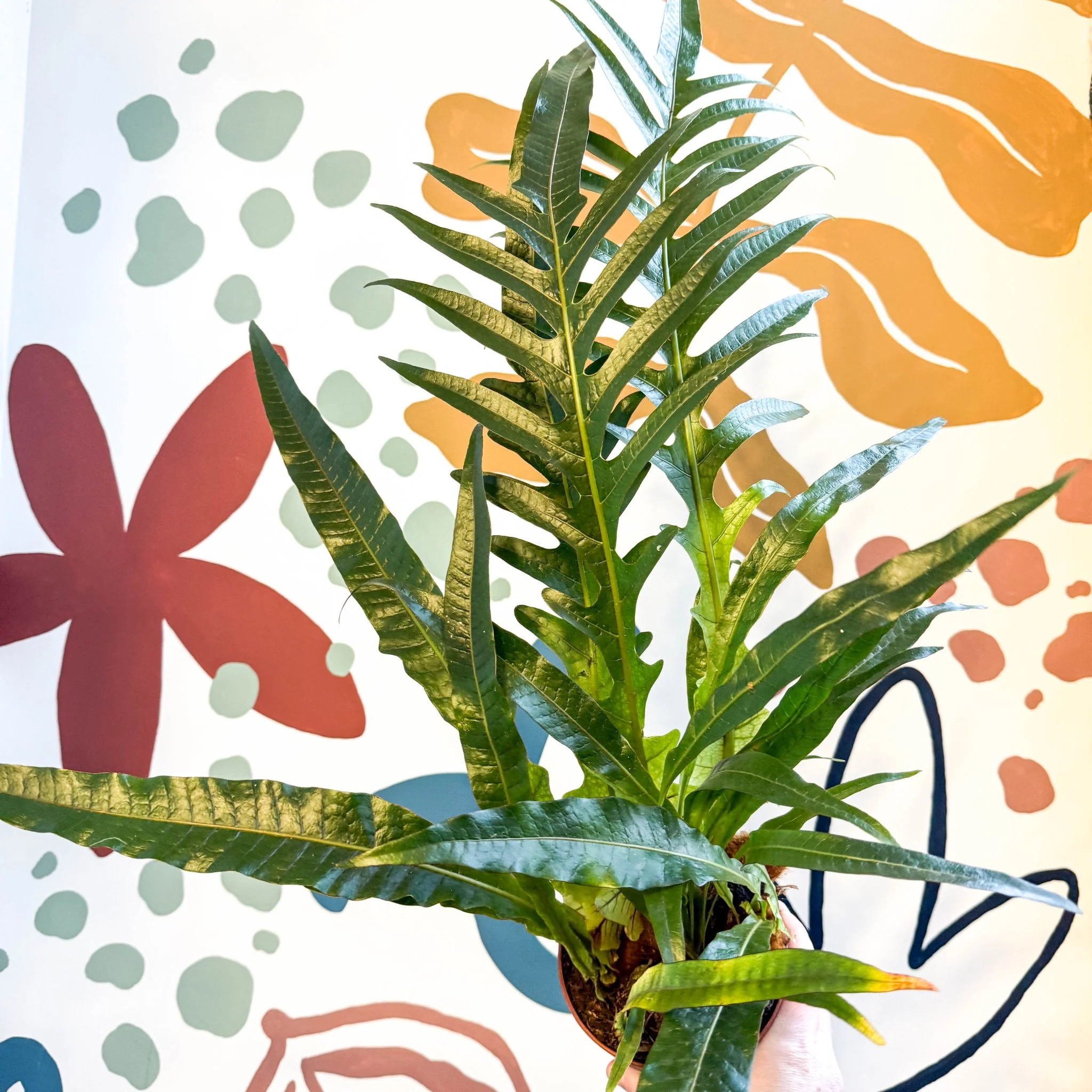
Aglaomorpha Coronans 'Jim' - Basket Fern
A truly architectural fern, Aglaomorpha coronans ‘Jim’ is grown for its bold, textured fronds and unusual growth habit. Often referred to as a Basket Fern, this epiphytic species produces both upright fertile fronds and rounded shield fronds that help it anchor to surfaces in its natural habitat. Its sculptural form and tropical feel make it a striking choice for shelves, mounts, or hanging displays.
Scientific Name
Aglaomorpha coronans (‘crowned, garlanded fern’)
Previously classified under the genus Drynaria, which is still commonly referenced in horticulture.
Synonyms
Drynaria coronans
Common Name
Basket Fern, Oak Leaf Fern (sometimes used), Shield Fern
Origin
Native to tropical regions of Southeast Asia, including Thailand, Malaysia, and Indonesia, where it grows epiphytically on trees.
Light
Prefers bright, indirect light. Avoid direct sun, which can scorch the fronds. Can tolerate moderate light, but growth may slow and foliage may lose vibrancy.
Water
Keep the soil lightly moist but not soggy. Allow the top layer of soil to dry slightly between waterings. As an epiphyte, it prefers good airflow around its roots and does not like to sit in water. Reduce watering slightly in winter.
Humidity
Thrives in higher humidity. Ideal for bathrooms, kitchens, or grouped with other plants. A pebble tray or humidifier will help maintain healthy growth, especially in drier months.
Soil
Use a well-draining, airy mix. A blend suitable for epiphytic plants works best – think bark, coir, and a small amount of compost. This mimics its natural growing conditions and prevents root rot.
Food
Feed every 3–4 waters during the growing season with a balanced liquid fertiliser. Reduce feeding in autumn and winter.
Temperature
Prefers temperatures between 18–28°C. Avoid temperatures below 12°C and protect from cold drafts.
Pet-safe
Non-toxic, but best kept out of reach of curious pets to prevent damage.
Sprouts Top Tips
Don’t remove the round shield fronds at the base – these are a natural part of the plant and help protect and support new growth.
Extras
This fern can be mounted on boards or grown in hanging baskets to replicate its natural epiphytic habit, making it a great option for vertical displays.
Did You Know?
In the wild, Basket Ferns collect leaf litter and organic matter in their shield fronds, creating their own mini ecosystem and nutrient source high up in the canopy.
Product Information
Product Information
Shipping & Returns
Shipping & Returns
Description
A truly architectural fern, Aglaomorpha coronans ‘Jim’ is grown for its bold, textured fronds and unusual growth habit. Often referred to as a Basket Fern, this epiphytic species produces both upright fertile fronds and rounded shield fronds that help it anchor to surfaces in its natural habitat. Its sculptural form and tropical feel make it a striking choice for shelves, mounts, or hanging displays.
Scientific Name
Aglaomorpha coronans (‘crowned, garlanded fern’)
Previously classified under the genus Drynaria, which is still commonly referenced in horticulture.
Synonyms
Drynaria coronans
Common Name
Basket Fern, Oak Leaf Fern (sometimes used), Shield Fern
Origin
Native to tropical regions of Southeast Asia, including Thailand, Malaysia, and Indonesia, where it grows epiphytically on trees.
Light
Prefers bright, indirect light. Avoid direct sun, which can scorch the fronds. Can tolerate moderate light, but growth may slow and foliage may lose vibrancy.
Water
Keep the soil lightly moist but not soggy. Allow the top layer of soil to dry slightly between waterings. As an epiphyte, it prefers good airflow around its roots and does not like to sit in water. Reduce watering slightly in winter.
Humidity
Thrives in higher humidity. Ideal for bathrooms, kitchens, or grouped with other plants. A pebble tray or humidifier will help maintain healthy growth, especially in drier months.
Soil
Use a well-draining, airy mix. A blend suitable for epiphytic plants works best – think bark, coir, and a small amount of compost. This mimics its natural growing conditions and prevents root rot.
Food
Feed every 3–4 waters during the growing season with a balanced liquid fertiliser. Reduce feeding in autumn and winter.
Temperature
Prefers temperatures between 18–28°C. Avoid temperatures below 12°C and protect from cold drafts.
Pet-safe
Non-toxic, but best kept out of reach of curious pets to prevent damage.
Sprouts Top Tips
Don’t remove the round shield fronds at the base – these are a natural part of the plant and help protect and support new growth.
Extras
This fern can be mounted on boards or grown in hanging baskets to replicate its natural epiphytic habit, making it a great option for vertical displays.
Did You Know?
In the wild, Basket Ferns collect leaf litter and organic matter in their shield fronds, creating their own mini ecosystem and nutrient source high up in the canopy.