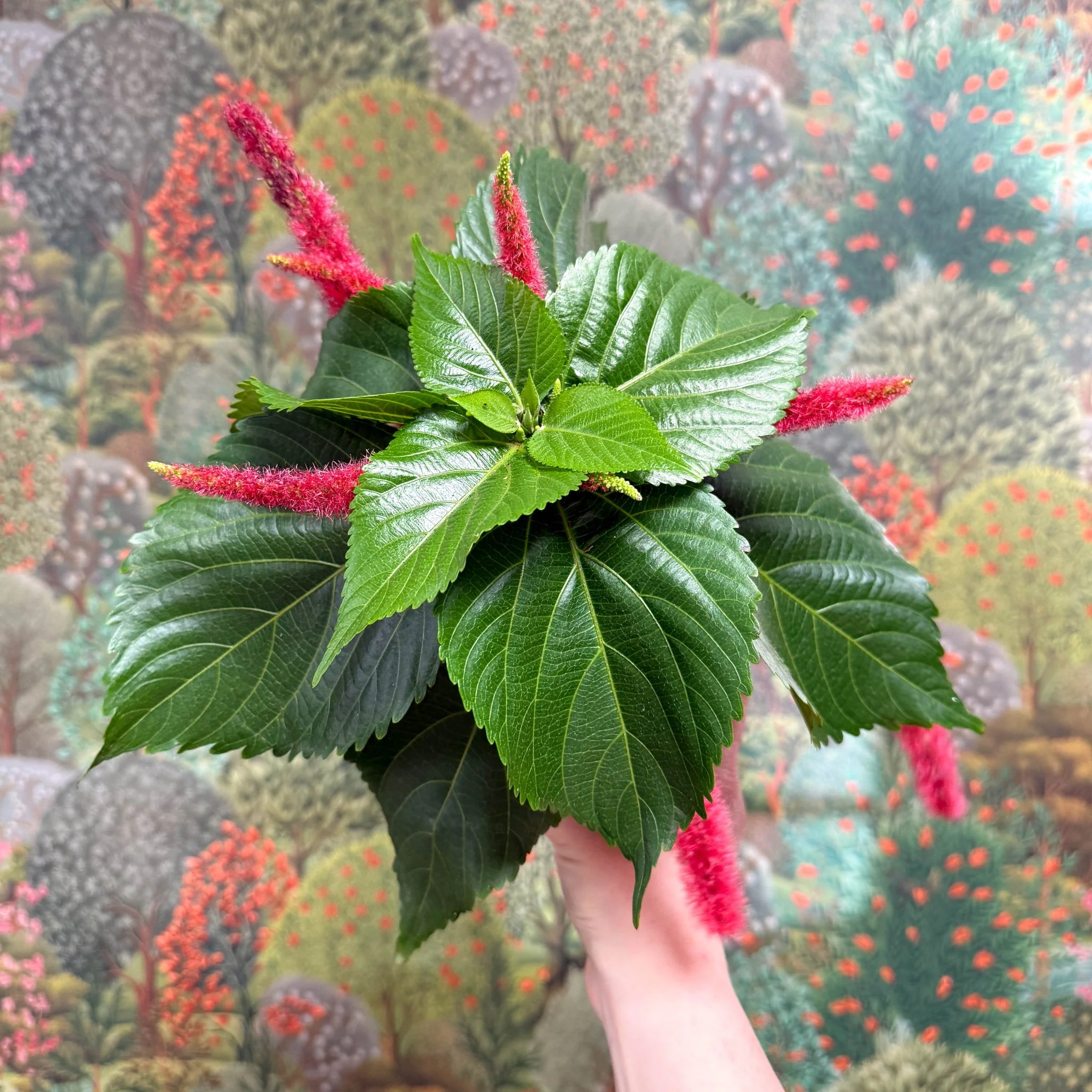
Acalypha hispida ‘Pink’
Known for its striking, soft, tassel-like flowers, Acalypha hispida is a true statement plant. Often called the Chenille Plant or Red Hot Cat Tail, this tropical beauty produces long, trailing, fluffy blooms in vibrant pink tones that cascade down from the plant like velvet ropes. Its lush green foliage and dramatic flowers make it a standout addition to any bright indoor space.
Scientific Name
Acalypha hispida (bristly Acalypha)
Synonyms
Acalypha sanderi (sometimes used in horticulture, though often refers to a slightly different form)
Common Name
Chenille Plant, Red Hot Cat Tail, Foxtail Plant
Origin
Native to tropical regions of Southeast Asia and the Pacific Islands, particularly New Guinea and Malaysia.
Light
Prefers bright, indirect light. It can tolerate some gentle direct sun, especially in the morning, but avoid harsh midday rays, which can scorch the leaves and flowers. Lower light will reduce flowering.
Water
Keep the soil consistently lightly moist during the growing season. Allow the top couple of centimetres of soil to dry out slightly between waterings, but never let the plant dry out completely. Reduce watering in winter, but do not allow prolonged dryness.
Humidity
Thrives in high humidity. Ideal for kitchens, bathrooms, or near a humidifier. You can also use a pebble tray to maintain moisture in the air. Dry air can cause leaf drop and poor flowering.
Soil
Use a rich, well-draining potting mix. A blend that retains some moisture while allowing excess water to drain freely is ideal. Repot every 1–2 years in spring to refresh the soil.
Food
Feed every 2–3 waters during the growing season with a balanced liquid fertiliser. Reduce feeding in autumn and winter.
Temperature
Prefers warm temperatures between 18–27°C. Avoid temperatures below 15°C and keep away from cold drafts or sudden temperature changes.
Pet-safe
Toxic if ingested, so keep out of reach of pets and children.
Sprouts Top Tips
If your Acalypha stops producing its signature tassel flowers, it’s usually a sign it needs more light and humidity – move it somewhere brighter and boost moisture in the air to encourage blooms.
Extras
Regular pruning will help maintain a bushy shape and encourage more flowering stems.
Did You Know?
The soft, trailing flowers can grow up to 30–50 cm long in ideal conditions, making it one of the most eye-catching flowering houseplants available.
Product Information
Product Information
Shipping & Returns
Shipping & Returns
Description
Known for its striking, soft, tassel-like flowers, Acalypha hispida is a true statement plant. Often called the Chenille Plant or Red Hot Cat Tail, this tropical beauty produces long, trailing, fluffy blooms in vibrant pink tones that cascade down from the plant like velvet ropes. Its lush green foliage and dramatic flowers make it a standout addition to any bright indoor space.
Scientific Name
Acalypha hispida (bristly Acalypha)
Synonyms
Acalypha sanderi (sometimes used in horticulture, though often refers to a slightly different form)
Common Name
Chenille Plant, Red Hot Cat Tail, Foxtail Plant
Origin
Native to tropical regions of Southeast Asia and the Pacific Islands, particularly New Guinea and Malaysia.
Light
Prefers bright, indirect light. It can tolerate some gentle direct sun, especially in the morning, but avoid harsh midday rays, which can scorch the leaves and flowers. Lower light will reduce flowering.
Water
Keep the soil consistently lightly moist during the growing season. Allow the top couple of centimetres of soil to dry out slightly between waterings, but never let the plant dry out completely. Reduce watering in winter, but do not allow prolonged dryness.
Humidity
Thrives in high humidity. Ideal for kitchens, bathrooms, or near a humidifier. You can also use a pebble tray to maintain moisture in the air. Dry air can cause leaf drop and poor flowering.
Soil
Use a rich, well-draining potting mix. A blend that retains some moisture while allowing excess water to drain freely is ideal. Repot every 1–2 years in spring to refresh the soil.
Food
Feed every 2–3 waters during the growing season with a balanced liquid fertiliser. Reduce feeding in autumn and winter.
Temperature
Prefers warm temperatures between 18–27°C. Avoid temperatures below 15°C and keep away from cold drafts or sudden temperature changes.
Pet-safe
Toxic if ingested, so keep out of reach of pets and children.
Sprouts Top Tips
If your Acalypha stops producing its signature tassel flowers, it’s usually a sign it needs more light and humidity – move it somewhere brighter and boost moisture in the air to encourage blooms.
Extras
Regular pruning will help maintain a bushy shape and encourage more flowering stems.
Did You Know?
The soft, trailing flowers can grow up to 30–50 cm long in ideal conditions, making it one of the most eye-catching flowering houseplants available.